
























by Chahat Awasthi, Milling and Grain contributor, India
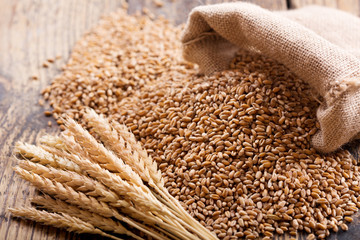
The Sustainable Wheat Initiative Europe (SWIE) launched its manifesto this summer in Utrecht, and the race to adopt low-carbon wheat has never been more intense. Climate scientists warn that agriculture must rapidly decarbonise if the world is to meet net-zero goals, and wheat is firmly in the spotlight.
It’s important to note here that wheat constitutes over half of the cereals produced in the EU, while maize and barley each account for roughly one third of the remaining 50 percent, as per a European Commission report published this September. Therefore, it doesn’t come as a surprise that the manifesto, released in June 2025, carries an ambitious pledge – cut emissions from wheat and wheat flour by 30 percent by 2030 compared to 2022 levels. The ultimate target is net zero by 2050.
The response has been heartening, too. Within weeks of the manifesto launch, more than 30 major industrial bakery companies, flour millers, cooperatives and associations had signed on. Since then, the list has swelled, with new endorsements announced almost every month. But as enthusiasm grows, so do the questions. Can such a sprawling and fragmented supply chain – from farmers to millers to multinational bakery brands – really achieve meaningful, measurable reductions in carbon? Or will the manifesto risk joining the graveyard of corporate climate pledges that never made it beyond press releases?
A sector built on bread
Bread is Europe’s staple. Behind each loaf lies a long value chain: wheat grown across the continent, milled into flour and baked at an industrial scale. The sector’s climate challenge is equally baked in. Roughly 80 percent of wheat’s carbon footprint arises at the farm level – from fertilisers, soil management and energy use. “Flour is the key ingredient in every bakery”, says Jean-Manuel Lévêque, president of the Industrial Bakers Association (AIBI), which spearheaded the initiative. “As a sector, we want to take responsibility for helping our wheat farmers transition to sustainable agriculture. This is essential to safeguarding the resilience of our value chain in the face of climate change.”
What makes this manifesto unusual is its collective character. For years, individual companies dabbled in regenerative agriculture or cleaner fertilisers. But efforts were patchy, isolated, and often too small to move the dial. SWIE attempts something bigger: a shared roadmap for the entire industry, with a framework of “mutual trust” between farmers, millers and bakeries.
“This is a turning point”, says Guido Vanherpe, AIBI board member and vice-president. “Bakery products are inherently plant-based, which makes them important in sustainable food systems. But we must take responsibility for our footprint. Through this joint effort, we’re stepping up.”
Industry giants unite
The signatories include household names in the bakery aisle as well as upstream suppliers experimenting with green inputs. Dossche Mills, one of Europe’s largest flour producers, is working with German agricultural trader AGRAVIS and fertiliser giant OCI Global to scale up low-carbon wheat. Meanwhile, pasta heavyweight Gallo Group, though not a signatory of SWIE, is trialling Fertiberia’s “Impact Zero” fertilisers, produced using green hydrogen. Such collaborations are key. Fertilisers made with renewable energy rather than natural gas could significantly shrink wheat’s carbon footprint, while precision farming techniques promise to cut fertiliser use in the first place.
Other food multinationals have already been laying the groundwork. General Mills, best known for cereals, has committed to regenerative farming practices across its wheat supply chains, from reducing tillage to planting cover crops. “As a food company, we depend on the health and well-being of our planet”, says CEO Jeffrey L. Harmening. “We are investing in landscapes and ecosystems to build resilience for nature, climate and communities.” SWIE signatory Cargill, another agri-giant, has piloted regenerative agriculture on more than 15,000 hectares of wheat and rapeseed, claiming a reduction of 10,200 tonnes of CO₂. Though better known for its work in animal feed, the company says wheat is central to its decarbonisation plans.
Companies like Lantmännen Unibake are also leaving a mark in the field. The Nordic bakery group, part of a farmer-owned cooperative, has been running its Climate & Nature programme for over a decade, boasting verified emissions cuts of up to 45 percent from grain cultivation. Its methods include smarter cultivation, precision farming, fossil-free fuels and fertilisers, and data-driven field management. Now, the company is rolling out the programme across its Benelux and Southern Europe operations. Patrick Wauters, Managing Director of Lantmännen Unibake Benelux & South Europe, describes it as “just the beginning.” He adds: “With the commitment of our bakery teams and partners across the value chain, we are making sustainable agriculture part of everyday baking.”
For SWIE, such case studies are proof that reductions are possible. “We know sustainability starts in the field,” says Carsten Thomsen, Lantmännen Unibake’s President. “But this is not a journey we can take alone. The real impact will come when customers, suppliers, and even competitors move in the same direction.”
Challenges
Agricultural emissions are notoriously hard to control. Unlike power plants or car engines, farms are open systems: emissions depend on soils, weather and biological processes. To add to the woes are the region’s climatic challenges, notes Nicola Cannon, Professor of Agriculture at the Royal Agricultural University.
“The challenge is made harder by the climatic challenges that Europe has been experiencing in the last five years, with more periods of prolonged dry weather and very high temperatures leading to crop stress and earlier crop senescence (death),” she said in an email interview. She explained that the plant breeding strategies have subtly changed over the last few years, away from a focus on high yields to developing varieties with specific traits that help reduce the need for particular crop inputs. However, these tend to be for single traits, e.g. orange blossom midge resistance.
“Breeders now seem to be moving towards considering Nitrogen Use Efficiency (NUE), which is a key component for helping to use nitrogen fertiliser more effectively, which is key in reducing GHG emissions in the sector,” Prof. Cannon added. There is also the question of costs. Green fertilisers, precision machinery and data systems require investment that not all farmers can afford. Without subsidies or guaranteed price premiums, the burden may fall on growers.
She further said: “The growing of cereals, but especially bread-making wheat, needs to change to help reduce the emissions of agriculture and to assist in the journey from a net emitter to a net sequester. It is highly likely that yields will decline to achieve a reduction in emissions. Many farmers will feel their income is threatened by a reduction in yield, but currently, wheat prices are very low due to high global supply.”
However, she added that the pain of the UK/European transition will be determined by how wheat growing is impacted internationally. “[G]rain buyers and millers need to understand that farmers will struggle to achieve 13 percent crude protein levels if they are required to substantially decrease nitrogen levels, and therefore contracts will need to be altered.” As of now, some initiatives that are attempting to bridge that gap include Dossche Mills exploring contracts that reward farmers for lower-carbon wheat. Others are lobbying for EU support schemes that mirror the subsidies offered for renewable energy.
As per Prof. Cannon, there are carrot or stick measures that can be adopted to support the transition to regenerative farming. “Measures to incentivise farmers have generally been fairly successful at changing farmers’ mindsets and getting them to try different farming techniques, which helps them progress towards regenerative techniques. The other option is a stick mechanism, such as lack of access to markets through pressuring British or European markets to only accept wheat grown in a regenerative manner. However, at the moment, it is unclear exactly what it takes to be a regenerative farmer, as it is not legally defined and lacks wide-scale acceptance/adoption of certification schemes,” she added.
She also pointed out that in England, the Sustainable Farming Incentive has been designed to help support farmers to adopt practices such as bi-cropping, mechanical weeding and the growing of cover crops but the initial scheme was so popular that it had to close earlier due to reaching its spending limit.
Accelerating move to growth
Prof. Cannon states that the solution lies in developing wheat varieties that have multiple resistance traits, helping to reduce the need for insecticides (e.g., resistance to Barley Yellow Dwarf Virus (BYDV), orange blossom midge and grain aphid), as well as good and reliable resistance, which is unlikely to break down in a season for diseases such as Septoria and yellow rust.
“Whilst across the Atlantic most farmers adopted herbicide-resistant crops, this has led to other problems, [including that] of herbicide-resistant weeds. Therefore, the approach towards suppressing or competing with weeds will probably need to be through bi-cropping or polycropping, which can enhance weed competition, or by having wheat varieties which form a denser canopy at early growth stages through enhanced crop vigour to help suppress weeds. Other options are using cover crops or companion crops to help suppress weeds,” she said.
She added that potential solutions could include exploring recycled nutrient sources, such as urine-based fertilisers. This helps reduce emissions from producing ammonium nitrate or urea-based fertilisers, by repurposing nutrients that may otherwise be wasted or act as pollutants. She also said that there may be a shift away from the higher-yielding winter wheats that are currently the norm in most areas of the world, with very high yields, to lower-yielding but also lower input spring wheat.
“[We need to] aid research into integrating regenerative farming techniques in a changing climate to form a better understanding of cover cropping. We also require a better understanding of systems research, which gives a better idea of how different management actions interact with each other,” Prof. Cannon added.
Many farmers are moving away from traditional ploughing methods for crop establishment, and are adopting lower-intensity tillage, such as minimum tillage or direct drilling. However, there tend to be greater weed challenges or a greater reliance on herbicides for controlling weeds in these non-inversion tillage techniques. “Many farmers are experimenting with cover crops either because they want to improve soil health [in] their farm, or because they are incentivised to grow cover crops through the Sustainable Farming Incentive in England,” said Prof. Cannon.
The adoption of cover crops should help reduce nitrogen leaching and sequester carbon, whilst also protecting the soil from extreme weather events and helping to keep living roots in the soil. Living roots are an important factor for improving soil health as they release sugary exudates, which help soil aggregation but also feed and sustain the soil biology.
Prof. Cannon explained that healthy soil tends to be more resilient to climatic stresses, as well as offering improved workability and a greater working window, greater nutrient retention and an easier environment for crop establishment and development. “A challenge is the lack of funding for non-biased near-market research. Lack of interdisciplinary thinking, e.g. how taking nitrates out of drinking water could help both the water sector and the agricultural sector,” she said.
Bread and beyond
Examples of low-carbon wheat flour, such as Wildfarmed, are rapidly growing and finding more farmers to meet the demands of their expanding markets. Prof. Cannon notes: “These products not only have environmental benefits but also offer a tasty and healthy alternative to how the majority of people choose to buy their bread.” If Europe can show that bread can be made with dramatically less carbon, it could inspire similar transformations across agriculture.
For now, the ovens keep running, the fields keep growing and the manifesto’s signatories keep signing on. Whether they can bake sustainability into the heart of Europe’s breadbasket will be a story worth watching – one that stretches far beyond the crust.