































by Muhammad Umar, Technical Sales Manager and Dr Bernhard Eckel, Vice President, Dr. Eckel Animal Nutrition, Germany
Mycotoxins remain a persistent feed safety challenge in animal production. These toxic fungal metabolites contaminate raw materials and finished feed, posing a clear risk to animal health, performance and food safety. With more than 400 known mycotoxins, their effects range from acute toxicity to performance losses and long-term organ damage—often resulting in economic losses and compromised animal health. Managing this risk requires a consistent, science-based approach that combines reliable detection with targeted mitigation strategies.
Contamination along the feed chain
Mycotoxin contamination can occur at any stage of the feed chain—from crop growth to storage and transport. Environmental conditions, especially temperature and humidity during pre- and post-harvest phases, play a key role. Climate change is making the situation more difficult. Higher temperatures and irregular rainfall patterns create favourable conditions for fungal growth and increase the likelihood of contamination.
The most relevant mycotoxins in feed safety programmes include aflatoxins, fumonisins, ochratoxins, deoxynivalenol (DON), T-2 and HT-2 toxins as well as zearalenone. Their chemical structure, polarity and toxicity differ, leading to varying effects across animal species. Regions such as Kenya, China and South Africa are considered high-risk areas, particularly for aflatoxins and fumonisins. Given these regional differences, effective management starts with reliable detection. A combination of field testing and laboratory analysis provides the best basis for continuous monitoring and rapid response.
Impact on health and performance
Mycotoxins can impair animal performance, even when contamination levels appear moderate. Typical symptoms include lower feed intake, vomiting and diarrhoea, as well as liver and kidney damage. Metabolic disorders can further compromise productivity. At the same time, several mycotoxins can suppress the immune system, increasing the risk of secondary infections. Reproductive performance is also affected, with consequences such as reduced fertility, embryonic mortality or lower egg production. In practice, contamination rarely involves just one toxin. Multiple mycotoxins are often present at the same time, and their additive or synergistic effects can further aggravate the situation. This combined mycotoxin exposure or multi-mycotoxicosis is becoming an increasing challenge in modern animal production.
Managing mycotoxins in practice
An effective feed safety programme starts with prevention at the source. Good crop management, pest control and optimised storage conditions help to limit fungal growth. The use of mould inhibitors is a key measure to protect feed raw materials and finished feeds during storage. MoldCid Pro is a synergistic blend of propionic, benzoic and formic acids. It targets microbial activity and stabilises pH—two critical factors in mould development. This ensures reliable protection of grains during storage. In a feed trial conducted in Vietnam, MoldCid Pro significantly reduced mould growth over a period of eight weeks.
When contamination cannot be avoided, the use of a suitable mycotoxin binder becomes essential. Anta®Ferm MT 80 is a multifunctional complex of organic and inorganic binding components designed for broad-spectrum efficacy across different animal species. When included in feed, it improves performance and feed efficiency under mycotoxin challenge, making it a key element of a comprehensive feed safety programme.
Field data from broiler production
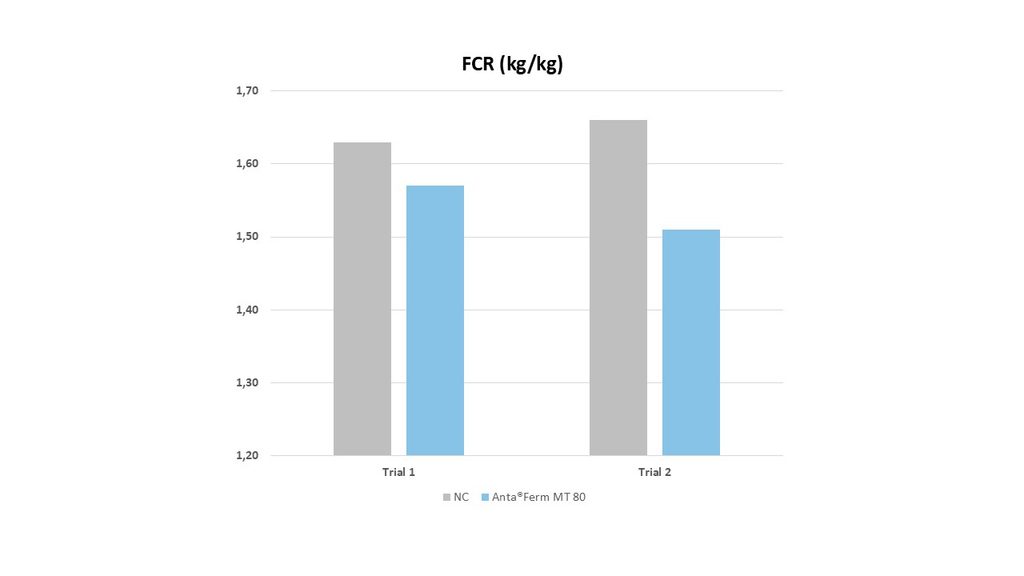
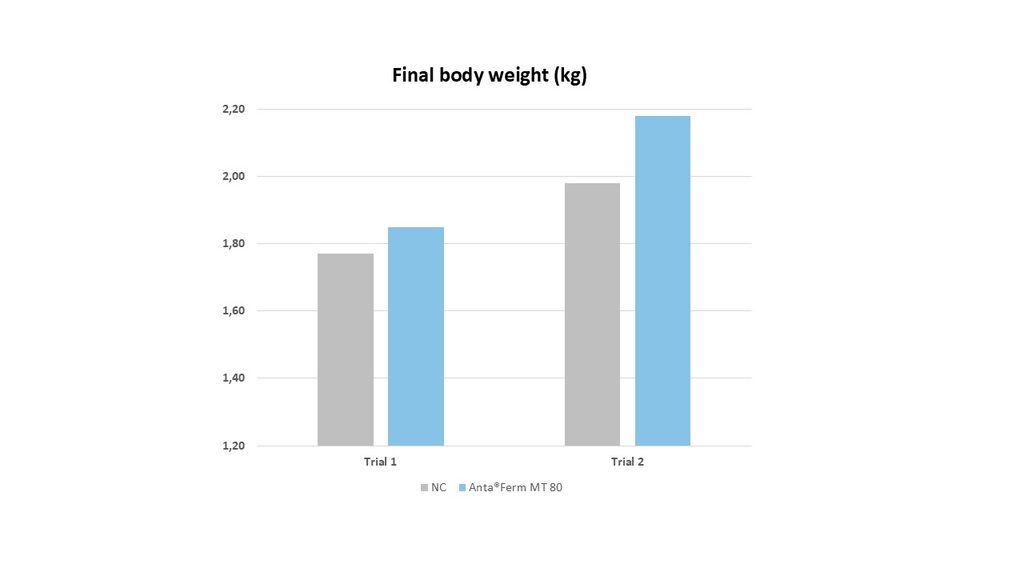
Anta®Ferm MT 80 has been evaluated in several broiler trials, a production system where performance responses to feed quality challenges are quickly visible. In two trials over 37 days, broilers fed diets supplemented with Anta®Ferm MT 80 (1kg per tonne) showed clear improvements compared to an untreated control group. The diets were naturally contaminated with multiple mycotoxins, reflecting practical conditions. Final body weight increased by 4.3 percent and 9.2 percent, while feed conversion ratio improved by 3.8 percent and 9 percent, respectively. These results confirm the product’s effectiveness in reducing the negative impact of mycotoxins under field conditions.
Staying ahead of mycotoxin risks
A drop in performance is often the first visible sign of a hidden mycotoxin problem—but by then, losses may already be underway. Acting early is therefore critical. With the right feed additive strategy, producers can intervene in time and stabilise performance. Mycotoxins remain a growing threat to feed quality and animal health, further intensified by climate change. Combining effective mould control with reliable mycotoxin binding provides a practical and proven strategy to protect both performance and profitability.
MoldCid Pro and Anta®Ferm MT 80 represent a science-based approach to mycotoxin risk management—supporting more consistent feed quality and animal performance. Early detection and targeted intervention make the difference.