



























by Juste Hahne, Senior Product Manager and Valerie Brunner, Product Manager Grinding, Bühler Group, Switzerland
Grinding grain into flour is among the oldest industrial processes. For centuries, its fundamentals changed little: mechanical force applied to a biological raw material, guided by experience and deep know-how. Over the past decades, however, milling has evolved into one of the most technically sophisticated segments of food processing. Modern mills are larger, faster, more reliable and more energy efficient than ever before.
Yet sophistication has not eliminated complexity. Millers are still required to transform heterogeneous and inherently variable raw materials into end products that meet increasingly stringent requirements for quality, consistency and food safety. They must do so while maximising yield, minimising energy consumption and extending the operating lifetime of expensive mechanical assets. Achieving all three objectives simultaneously remains difficult, particularly in grinding, where small parameter changes can have outsized effects on downstream performance and the functional properties of flour.
Effective process control, therefore, continues to be one of the defining challenges of modern milling.
Why grinding is the critical lever
Grinding sits at the technical heart of the milling process. It is also one of its most resource-intensive stages. In a modern mill, grinding equipment accounts for up to 40 percent of total energy consumption, making it a primary target for efficiency improvements.
The complexity of grinding explains both its importance and its difficulty. A typical milling process may involve four or five break passages to shear the grain, followed by ten to twelve reduction passages to progressively reduce flour particle size. Each passage introduces its own set of variables, including roll gap, differential speed, pressure and thermal behaviour. These variables interact with raw material properties that change not only from batch to batch, but also within a single delivery.
As a result, grinding performance depends on continuous fine-tuning. Historically, this tuning has been a manual process. Millers rely on experience, historical plant knowledge and direct observation of material flow and machine behaviour. While this approach remains effective, it is inherently limited by human perception and skills availability.


The SmartMill journey
At Bühler, the adoption of advanced digital technologies in milling is viewed as a journey rather than a single step change. The ultimate destination of that journey is the SmartMill: a fully automated, self-optimising operation in which equipment, data and control systems work together to continuously improve performance. This journey unfolds in stages of autonomy, each delivering incremental value:
- Connect. Sensors and data networks collect operational data and make it digitally accessible.
- Monitor. Advanced analytics convert raw data into actionable insights, supporting fact-based decision making.
- Assist. Automation reduces the need for human intervention by optimising specific processes.
- Self-optimise. Multiple machines and data sources are integrated to enable end-to-end, autonomous optimisation.
SmartMill technologies cover the entire mill, incorporating all associated processes. This article focuses specifically on grinding optimisation.
From recipes to real-time insight
Many advanced mills already use automation to simplify setup and improve repeatability. Recipe-based approaches allow operators to apply predefined settings across various processes, enabling one-touch configuration for different grain types or customer requirements. These systems help standardise operations and reduce setup time.
However, recipes define intended operating conditions, not actual ones. The next stage of smart grinding focuses on closing that gap by providing real-time insight into what is truly happening inside the roller mill.
Advanced sensor technologies play a central role. Bühler is pioneering the integration of temperature and vibration sensors within the grinding rollers. These innovative sensors are designed for accurate, reliable operation in demanding industrial environments. Their location, adjacent to the working surface of the roller, offers unprecedented, continuous feedback on machine condition and process behaviour.
Roller internal temperature, combined with roller speed data, can be used to infer grinding pressure. Temperature monitoring also supports heat management by triggering alarms if predefined thresholds are exceeded. Vibration measurements provide early indications of mechanical issues, including roller surface damage, bearing wear or motor problems.
The most advanced systems go further, by identifying critical patterns which enable early detection of problems in the process such as uneven grinding pressure across the roller surface, supporting more precise diagnosis and adjustment.

Turning data into decisions with AI
While advanced sensors dramatically increase data availability, data alone does not improve performance. Translating high-frequency, multidimensional data into clear operational actions remains a challenge.
This is where artificial intelligence can play its part. By combining multiple data sources, including roller temperature profiles, vibration signals, energy consumption, product quality metrics and yield data, AI models can be trained to identify patterns that are not visible to millers.
In pilot applications, such models have been used to detect roller imbalances reliably and to recommend targeted adjustments, such as changes to grinding gaps. In one documented case, these recommendations reduced power consumption in a single roller pair by as much as 38 percent while keeping quality parameters within the target range.
Early use cases typically focus on the most energy-intensive grinding passages, often the first three break and reduction passages. When deployed in this way, AI-supported grinding optimisation has reduced overall energy consumption in the mill section by 8 to 10 percent, while also improving yield and product quality.
Those benefits are already profitable. Savings in energy consumption, labour costs, moisture loss reduction and a reduced frequency of roller refurbishment mean that SmartMill installations typically deliver a positive return on investment in one or two years.
Notably, initial results suggest that the same AI models can perform effectively across different mills without extensive retraining, indicating a level of generalisability that is critical for scalable deployment. As of 2026, around half a dozen pilot mills are operating Bühler’s Grinding Optimizer system ahead of a broader product launch planned for later this year.
From recommendation to autonomy
Today, Grinding Optimizer operates in advisory mode. It generates real-time recommendations, but millers retain decision authority, reviewing those recommendations and choosing whether to execute the suggested adjustments.
The goal is full autonomy. From a technical perspective, this transition is relatively straightforward. Many modern mills already have the automation infrastructure required for closed-loop control. The more significant challenge is organisational and cultural. Autonomous operation requires trust in algorithms, clarity around accountability and new operating models for mill staff.
As confidence grows through consistent performance improvements and transparent decision logic, this shift becomes achievable.
Looking ahead
Future developments in smart grinding will extend beyond current implementations. Additional data sources, more advanced AI models and integration across different processes in the mill will further enhance optimisation potential. Over time, we expect grinding to evolve from a mechanically constrained process into a digitally orchestrated system that continuously adapts to raw material variability, final product specifications and commercial objectives.
For millers, the implication is clear. Competitive advantage will increasingly depend not only on equipment quality, but on the ability to sense, interpret and act on data at scale. Grinding, long viewed as a mature process, is becoming a focal point for digital innovation.
-ends-
Image captions
FMAG2610_Buhler_1
FMAG2610_Buhler_2, FMAG2610_Buhler_3 & FMAG2610_Buhler_4
FMAG2610_Buhler_5
Optimised roller gap adjustments consistently deliver significant benefits.
FMAG2610_Buhler_6
FMAG2610_Buhler_7
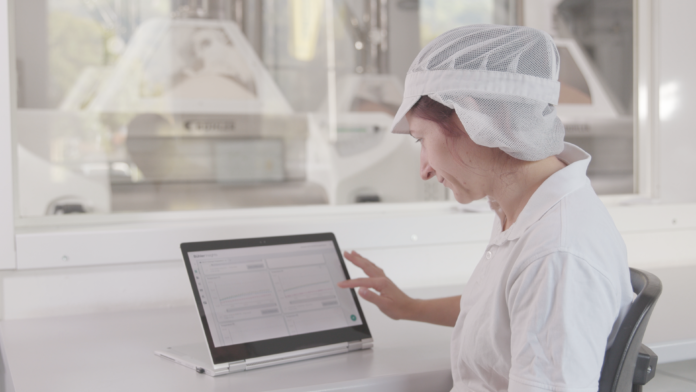
Operators and head millers will soon have access to a tool that helps them manage their daily tasks around the clock.
FMAG2610_Buhler_8
FMAG2610_Buhler_9
Pull Quotes
Pull Quote 1:
In one documented case, these recommendations reduced power consumption in a single roller pair by as much as 38 percent while keeping quality parameters within the target range.
Pull Quote 2:
Competitive advantage will increasingly depend not only on equipment quality, but on the ability to sense, interpret and act on data at scale.