



























by Robert Hamilton, Technical Sales Manager, Kemin Animal Nutrition and Health EMENA, UK
Since the 1980s we have been using crude protein (CP) as a key element in ration formulation. As with other industries, when advances are made, they are incorporated into systems and practises. This is also the case for ration formulation. With the mounting pressure to reduce soya usage as world demand increases, combined with the environmental impact of excess nitrogen protein excretion, it has never been a better time to explore the use of rumen protected amino acids (RP-AA). They not only help in addressing these key issues but also provide a range of benefits, such as increased production, improved milk quality, improved fertility and better general health of the animal. In mid-range CP diets, it is impossible to meet the Methionine (Met) and Lysine (Lys) requirements of the animal, therefore we cannot achieve maximum potential and optimum returns.
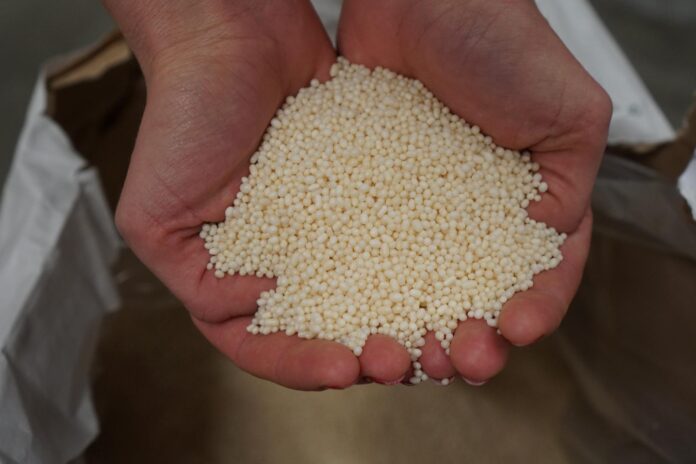
Amino acids have been used successfully for many years in the monogastric sector and it makes perfect sense that, with improving rumen protection technology (encapsulation and HMBi), along with higher bioavailability, they are also utilised more extensively in the ruminant sector. To maximise bioavailability the product must escape the rumen relatively intact (encapsulated products) and into the absorption sites (abomasum, small intestine) to achieve the highest possible transfer value. Dependant on the encapsulation technology and product core (particle size & functional specific gravity) the true bioavailability can be very different from product to product.
Methionine benefits are commonly known within the dairy industry but, when used in concert with Lysine, it provides additional benefits beyond individual component feeding. It is important that, when using these two RP-AA, they are fed at the correct quantity (g/hd/day), at the optimal proportion in relation to the metabolisable protein within the diet and at the correct ratio between Met to Lys. This will ensure optimal synergistic improvements.
Several formulating software packages already have an AA balancing element to the program, which enables the ruminant nutritionist to take full advantage. The amount of each AA product required is based on the metabolisable Met & Lys generated from the raw materials being used in each individual diet. A herd feeding a large percentage of grass for instance, may require little to no lysine addition, whereby a maize/whole crop fed herd will be the opposite. However, this will largely depend on the stage of lactation, milk yield, CP level and nutritional model.
Due to the high concentration and high bioavailability, when AA balancing is correctly formulated, it allows for the reduction of CP (15-16% typical diet). Beyond rumen functionality an RP product can provide the required essential limiting AA.
Alongside standard milk components, casein is also increased with AA balancing so, for producers on a milk constituent contract supplying cheese processors, this could prove beneficial, as 1L of milk with a high casein level produces more cheese than 1L of milk with a low casein level. Although presently not compensated for casein, it could prove to be a cash point in the future.
When calculating the CP cost saving, combined with the improvements in production, constituents, fertility and general health of the animal achieved by AA balancing, amino acid usage can today be easily justified.