




























by Viknesh Gopika Subash, Former Production Operator at Müller
Agriculture, particularly livestock farming, is a significant contributor to greenhouse gas emissions, with methane playing a critical role due to its high global warming potential (25 times more potent than CO2). As industry and regulatory pressures mount, dairy producers must explore advanced strategies to curb emissions while maintaining productivity and profitability.
This study recommends integrating Asparagopsis seaweed oil into dairy brand’s cattle feed regimen to complement or replace Bovaer, achieving superior methane reduction while supporting operational scalability and long-term sustainability.
Methane emissions in dairy farming
Methane production from enteric fermentation in dairy cattle accounts for a significant portion of farm-related greenhouse gas emissions. Addressing this challenge requires innovative feed additives that not only reduce emissions but also align with consumer and regulatory expectations for sustainable farming.
Dairy producers like Müller UK currently uses Bovaer, a feed additive proven to reduce methane emissions by 30-60 percent, depending on the diet and feed composition. While effective, there is room for improvement, particularly for farms targeting aggressive emission reduction goals.
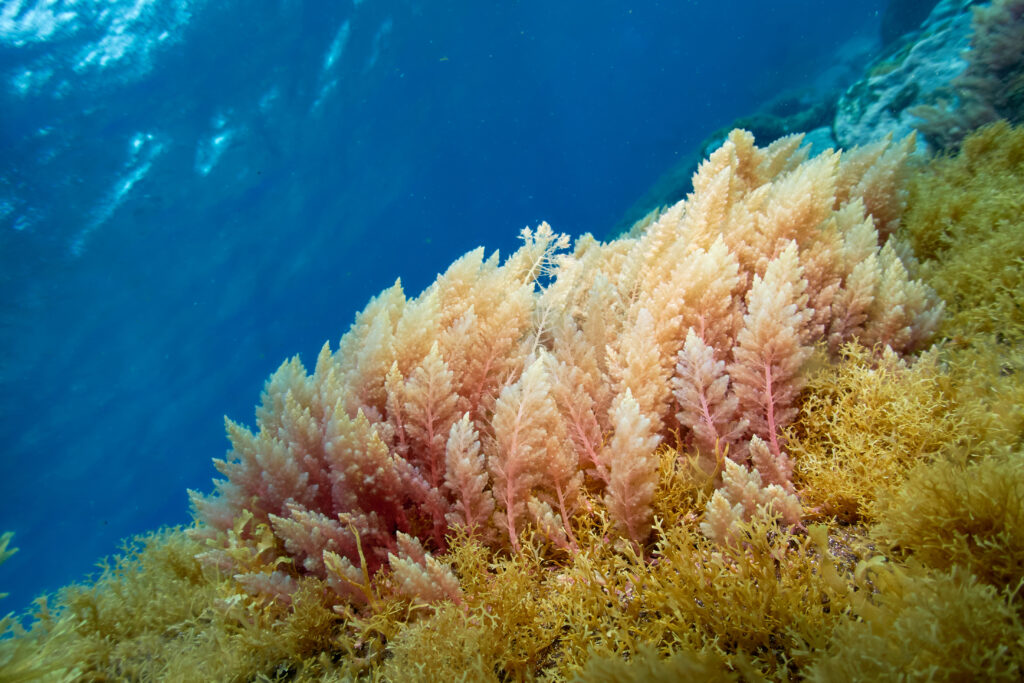
What is Asparagopsis?
Asparagopsis is a red seaweed rich in bromoform and other bioactive compounds that inhibit methane production in the rumen. It reduces enzymatic activity responsible for methane generation without compromising cattle health or productivity.
There are several advantages to the use of Asparagopsis, including higher methane reduction efficiency. Studies indicate Asparagopsis reduces methane emissions by up to 95.6 percent, significantly outperforming Bovaer. This efficacy offers dairy brands a fast track toward achieving net-zero goals and exceeding industry benchmarks. The seaweed is also natural and sustainable, a renewable solution that aligns with increasing consumer demand for environmentally friendly dairy products. Sustainable seaweed farming practices can further bolster companies green credentials. There is also reportedly no negative impact on cattle with Asparagopsis, as research confirms no adverse effects on milk quality, yield, or animal health. In some cases, Asparagopsis enhances digestion, potentially improving overall productivity.
Overall, the seaweed oil has proven effectiveness, with laboratory and farm trials globally validating its reliability in diverse dairy farming contexts.

Implementation strategy: Pilot program
Partnership Development
Dairy brands should collaborate with Asparagopsis suppliers to ensure a reliable and sustainable source of high-quality seaweed oil.
Controlled Introduction
Begin with small-scale trials on select farms, gradually integrating Asparagopsis into existing feed formulations.
Data Collection and Monitoring
Employ methane measurement tools to monitor emission reductions and assess animal health and milk productivity.
Cost-Benefit Analysis
Evaluate the economic impact, comparing the upfront costs of Asparagopsis with potential long-term savings from reduced emissions and carbon taxes.
After successful pilot trials, the next step would be to expand usage across all dairy operations, with farm staff training on integration best practices.
Benefits to the company
Achieving methane reductions of up to 95.6 percent can substantially lower carbon footprint in dairy operations, improving overall environmental impact.
There are also economic gains to be had, with carbon tax savings reducing exposure to emissions penalties.
The operational efficiency is another benefit Asparagopsis can provide, as potential enhanced digestion may improve productivity and profitability.
Incorporating Asparagopsis can also provide market differentiation, positioning the company as a sustainability leader which can attract eco-conscious consumers and stakeholders.
Staying ahead of emissions regulations would also secure dairy brand’s such as Müller UK’s position as industry pioneers.
Challenges and considerations
Key challenges to be considered include supply chain development, economic feasibility, and regulatory alignment.
Establishing a reliable and sustainable supply chain for Asparagopsis is critical, so collaborating with seaweed farming initiatives can mitigate risks.
While Asparagopsis may incur higher initial costs than Bovaer, its long-term benefits—carbon tax savings, consumer demand, and operational efficiency—justify the investment.
It’s also important to have regulatory alignment, and confirm compliance with UK and EU feed additive regulations.
Future steps
Transitioning to Asparagopsis seaweed oil represents a transformative opportunity for dairy brand’s such as Müller UK to enhance its methane reduction efforts. By prioritising pilot testing, scaling up strategically, and investing in supply chain development, brands can lead the dairy industry toward a sustainable future.
Published in the May 2025 issue of Milling and Grain.