





























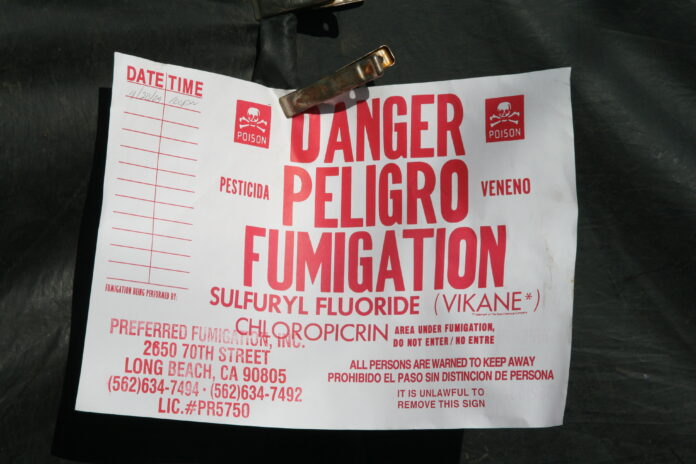
While often overlooked by the general public, logistics is our industry’s key operational competency, ensuring a dependable and sufficient supply of food to populations across the world. For staples such as wheat and other grains, the ability to transport and store product reliably and safely is critical to global food security and stability. Geopolitical shocks, extreme weather events, and outbreaks of destructive pests can all disrupt these precious supply chains, with potentially catastrophic results on the availability of the food we need to feed an ever-growing population.
To be ready for the first two risks, farmers, growers and the supply chain often perform unsung feats of mastery to re-balance existing routes to market around a blockage or re-negotiate supply contracts to fill a specific need. However, to protect against the third risk, which can be just as complex, fumigation is an essential safeguard.
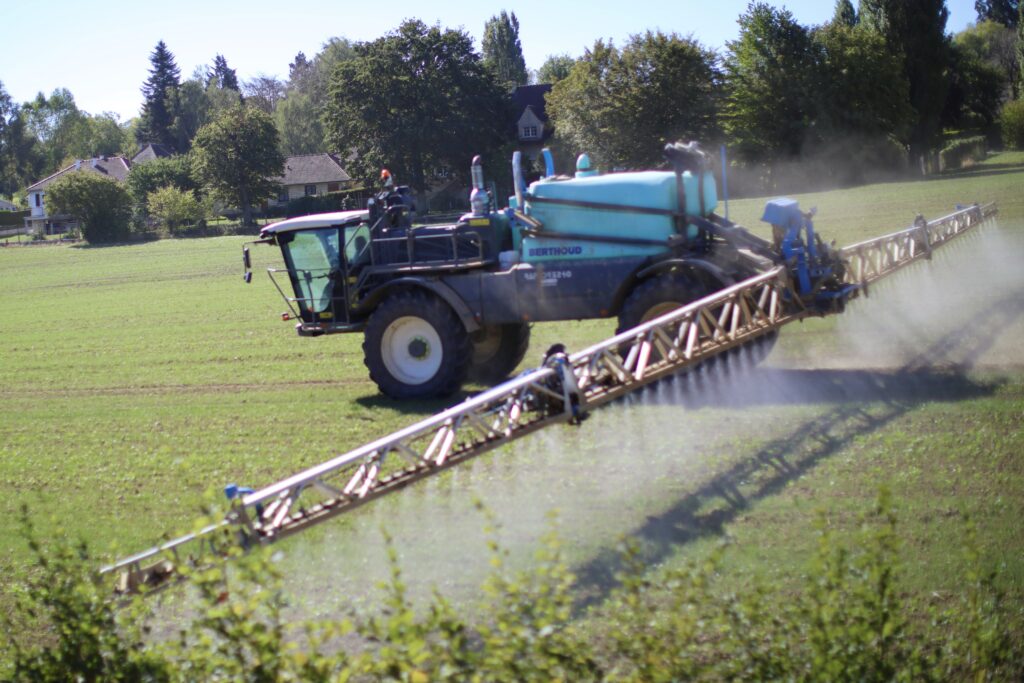
During the journey from farm to fork, across and within borders, which often sees drastic changes in the surrounding environment, fumigation takes place at multiple points to keep storage facilities free of invasive pests. However, with the most commonly used chemicals for fumigation lacking effectiveness or having a severe environmental impact, industry is now looking for new solutions to ensure that feeding a global population is not contributing to the same extreme climate change events that we have been experiencing ever more frequently over the past few years.
Fumigation – a structural part of the industry
As grain travels throughout the supply chain, it is vulnerable to pests including insects and rodents. According to the United Nations Food and Agriculture Organisation, around 40 percent of the food produced annually is lost due to pest infestations. Fumigation is essential to provide the safe storage and transportation of these commodities and takes place in grain silos as well as ship holds. On average, grain silos should be fumigated every six months to ensure a pest-free environment. As well as protecting natural flora and fauna; fumigation also plays a crucial role to promote global food security. The world is increasingly reliant on efficient, cost-effective, and uncontaminated food supply chains. Amid a more challenging climate and exponentially rising demand for food, fumigation to guarantee safe storage for bulk commodities like grain becomes ever more crucial.
Historically, the pest control industry has relied heavily on the chemicals methyl bromide and sulfuryl fluoride for its fumigation needs, but scientific analysis of their environmental impacts is prompting industry and regulators to seek out alternatives. The go-to fumigants have an unacceptably negative environmental footprint. Methyl bromide, once the go-to fumigant, is a toxic ozone depleting substance. Its reactivity in ozone depletion is more than 50 times greater than bromine, and evidence suggests its use has resulted in conditions including cancer and paralysis for applicators and neighbouring communities where fumigation takes place.
In fact, estimates suggest that every kilogram of methyl bromide used destroys about 4.2 tonnes of ozone. Recognising this threat, the Montreal Protocol, an international treaty, was agreed in 1987 to protect the ozone layer by phasing out methyl bromide by 2015. Some countries, including Canada, the United Kingdom as well as the European Union’s Member States have banned its use altogether within their borders. However, many countries continue to use it under quarantine exemptions, with alarming increases in its use noted in nations including Australia, China, and India for this purpose in recent years.
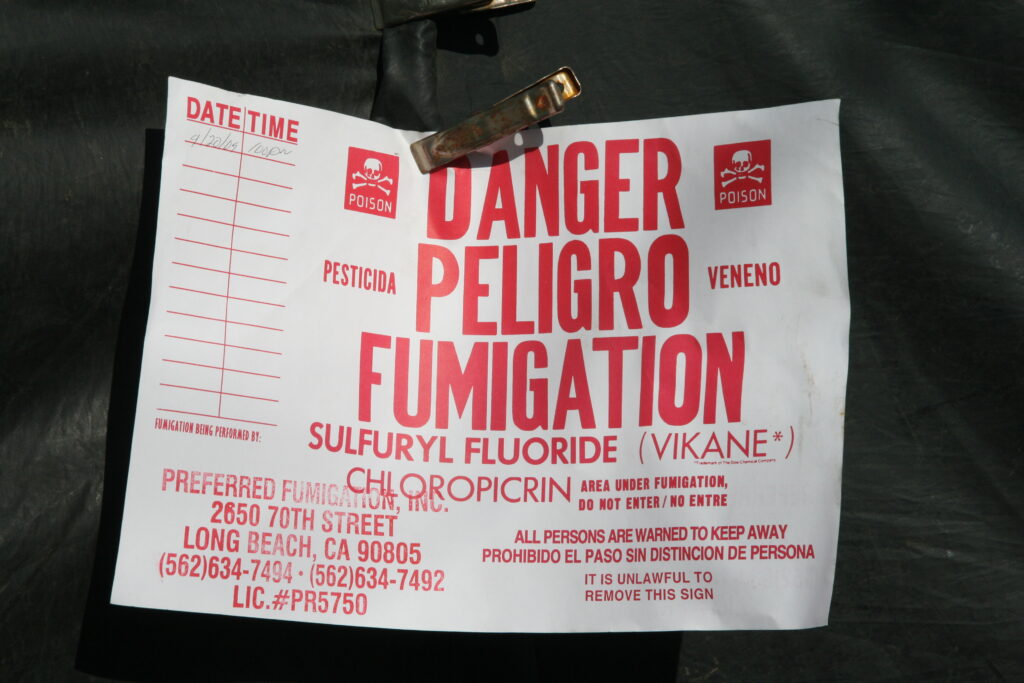
Searching for an alternative to methyl bromide, industry has shifted heavily towards the use of sulfuryl fluoride as an alternative. While effective, sulfuryl fluoride presents its own risk to the climate. A synthetic greenhouse gas, sulfuryl fluoride has a Global Warming Potential 4600 times that of carbon dioxide. Approximately 1000 tonnes of sulfuryl fluoride are used annually in Europe alone, resulting in emissions equivalent to 4.5 million tons of CO2, leading to renowned climate scientist Susanne Götze to label sulfuryl fluoride a ‘climate killer’.
Despite the recognised environmental harms of both methyl bromide and sulfuryl fluoride, their use in fumigation falls outside the regulatory frameworks of major environmental agreements like the Kyoto Protocol or the Paris Agreement. Currently, there are no global targets for reducing emissions from these chemicals. As a result, around 11,000 tonnes of methyl bromide and 3000 tonnes of sulfuryl fluoride continue to be used each year, contributing to the worsening climate crisis.
While historically considered to be a preferred alternative to methyl bromide, sulfuryl fluoride is now under pressure from regulators, especially in Europe. Last year, some EU Parliament legislators negotiating a new Fluorinated Gases Regulation called for sulfuryl fluoride to be banned. An outcome on this Regulation has still not been reached. And amid a cold snap at the turn of the year, authorities in some German states prohibited the use of sulfuryl fluoride at low temperatures due to concerns about its effectiveness, disrupting the international timber trade and causing huge backlogs at European ports.
With governments across the world imposing more stringent sustainability-related rules and obligations on business, there is now significant pressure from regulators and investors for companies to show their activities are compatible with a net zero future. There is increasing pressure on suppliers, at all levels of supply chains, to account for their carbon footprint, including their associated emissions. Facing these challenges, the grain industry is now urgently in need of alternative options.
What are the alternatives?
While methyl bromide and sulfuryl fluoride are not the only available treatments for fumigation, there is not yet a clear alternative. Options such as phosphine – widely used in the grain industry – as well as heat treatment, do not have the same environmental impact as methyl bromide and sulfuryl fluoride. Some countries are also actively exploring integrated pest management systems, which relies on an understanding of pest ecosystems and the changing seasons to maintain control of potential threats.
However, for all alternatives, effectiveness is king. Resistance to phosphine is being increasingly observed in some pest species. Heat treatment faces similar efficacy challenges, and in an environment of inflated energy prices, can be cost-prohibitive. Integrated pest management is 100% chemical-free, but also highly vulnerable to changes in the natural world, increasingly a problem amid a more volatile climate.
Regulators under pressure
The lack of focus from global policymakers and regulators on the environmental impact of fumigation, which is absent from any discussions in the COP process, makes life harder for an industry in need of new alternatives.
Registering a new fumigant is a challenge. Despite the known climate harm caused by traditional products, regulators often drag their feet, resulting in a lengthy and onerous process, requiring broad and deep data sets on issues such as efficacy and environmental impact.

These same regulators more or less hold the keys to the kingdom on fumigation and so some industries are calling on them to speed up the process of registration of alternatives. As noted by The Methyl Bromide Technical Operations Committee at the UN, there is some progress on access for alternative solutions. Along with strong evidence, the backing of supply chains reliant on such products is a critical component for supporting the registration of new products.
A way forward?
Regulators in some countries, particularly those where the agricultural sector is especially important, are seeking environmentally sustainable alternatives to methyl bromide and sulfuryl fluoride. For example, in 2023, Australia registered hydrogen cyanide, a highly effective and environmentally sustainable replacement for both products for the milling and grain industry. Hydrogen cyanide is also registered in the EU, South Africa, Malaysia, and New Zealand.
In addition, and whilst not directly attributable to the milling and grain industry, both New Zealand and Uruguay’s Governments and forestry sectors aligned in opposition to methyl bromide, prompting regulators to register and approve Ethanedinitrile (EDN) as an effective, environmentally sustainable, alternative treatment for forestry products. This signals a growing industry shift towards responsible and sustainable treatment solutions.
Other countries are also exploring alternatives to the major legacy products. Yet with access to alternative products dependent on governments and regulators supporting registration and commercialisation, the voice of industry – specifically, end users – is crucial. As such, the grain storage and transportation supply chain must drive its own access to new, environmentally sustainable, alternatives by communicating the challenges and needs to decision-makers.
There is more focus than ever before on the environmental impact of supply chains and this is expected to increase. Unless new, effective and less environmentally harmful solutions are made accessible, the grain industry will continue to find itself in a difficult position. The choice, between being a laggard on sustainability, or risking the security of critical commodities, is not one our industry will want to be forced to make.
Published in the April 2024 issue of Milling & Grain