
























There are cities that seem built for reflection, and Turin is one of them. Elegant yet industrious, it carries the history of Italy’s great manufacturers and innovators in its streets and skyline. It was a fitting stage for ‘Wheat, Flour and … 2025,’ Ocrim’s annual open days event that this year marked the company’s 80th anniversary.
After last year’s edition in Cremona, the gathering moved north to the Piedmont capital, bringing together millers, technologists and partners from around the world for three days dedicated to the future of milling.
A company shaped by conviction
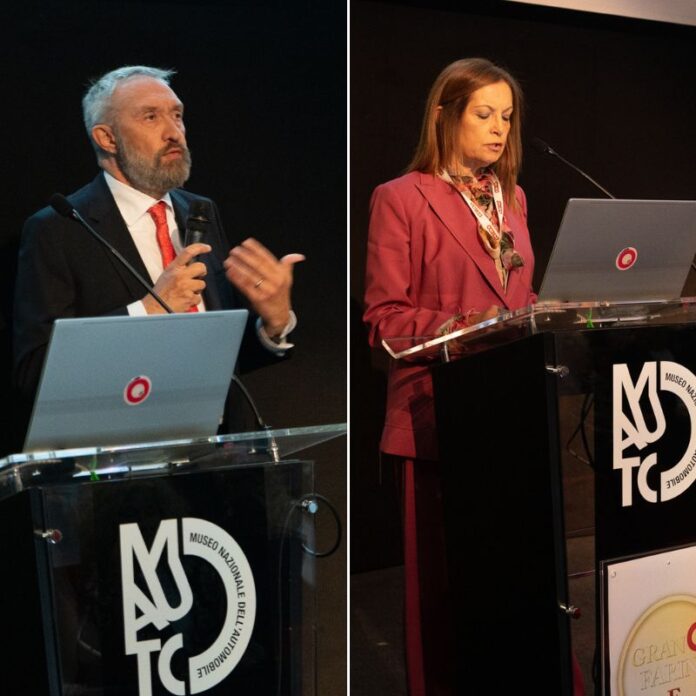
The first day’s programme, held at the MAUTO Auditorium, began with a speech that framed the entire event.
Alberto Antolini, Ocrim’s CEO and the man whose quiet determination has guided the company through nearly two decades of transformation, took to the stage with characteristic honesty. He did not simply celebrate Ocrim’s longevity – he spoke about its choices.
“Over the years, we’ve helped broaden the idea of Made in Italy worldwide,” he began.
“When I took on what seemed at the time an uncertain adventure, to reshape and realign our Cremona-based company, I held onto one phrase: this too shall pass. It reminded me that success and struggle are both part of the same journey.”
The CEO’s speech was rich in anecdotes and historical parallels.
He recalled reading a book about Enrico Mattei, the founder of ENI, whose pragmatic optimism helped rebuild Italy’s energy industry after the war.
“Mattei said, ‘Let’s sit down and find the parameters to strike the right balance.’ That sentence has stayed with me for years,” Antolini told the audience. “It’s a reminder that balance is at the heart of leadership – between courage and caution, tradition and innovation.”
From there, he traced Ocrim’s evolution through crucial technological decisions – among them, the adoption of optical sorting systems, which marked a turning point for milling quality.
“Looking to the future, we had to decide which technologies would define us,” he said.
“We chose to innovate in areas where human judgment and technology could work together – optical sorters, process automation and systems that respect the product’s natural identity.”
Antolini’s reflections moved seamlessly between the technical and the personal.
He spoke of visiting agricultural sites and seeing with his own eyes how the value of raw material begins with the soil. He recalled the early partnerships with Bonifica Ferrarese and other agricultural cooperatives, at a time when the entire turnover of the operation was modest, and the process still relied on manual work – “ladies measuring the diameters of melons and sticking the labels by hand.”
These memories, he said, are not nostalgia but lessons. “They remind us that technology is only as meaningful as the people and land behind it.”
Antolini also linked Ocrim’s story to Italy’s wider industrial narrative.
He revisited the origins of agricultural projects in Africa, such as those connected to Bonifica Ferrarese’s campus initiative, which later inspired aspects of Italy’s current Mattei Plan for cooperation with African nations.
“The idea of building knowledge through agriculture did not begin yesterday,” he said. “It began with people who believed that technology, education and the soil must be connected. That belief continues to guide us.”
Beyond machinery: Food as soft power
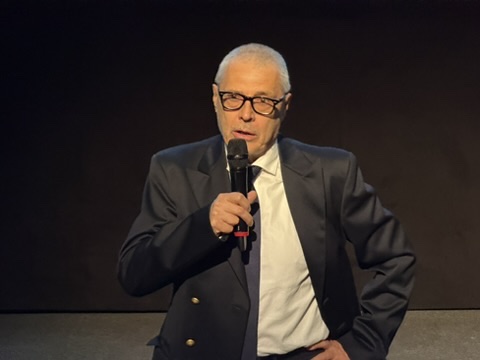
If Antolini’s speech traced Ocrim’s identity, Federico Vecchioni’s remarks set out its mission.
The CEO of BF Spa – Ocrim’s strategic partner in agriculture and food production – delivered a stirring address that expanded the discussion from industry to society.
“In today’s world,” Vecchioni said, “we are surrounded by destruction – by conflicts and divisions that seem endless. Yet there are also people, like us, who are born to build, to produce, to generate wealth and wellbeing. We have a responsibility to play our part.”
Vecchioni spoke about Ocrim and BF’s joint projects – from large-scale agricultural development in Africa to educational initiatives in Italy – as examples of how business partnerships can also be instruments of stability.
“Our vision is not a humanitarian one,” he clarified. “It is an economic one, built on competence, entrepreneurship and collaboration. But in that economic vision lies something profoundly human: the ability to bring food, technology and knowledge where they are needed most.”
He drew a sharp connection between food security and peace, describing food as a “soft power” that can act as a dam against conflict.
“Europe is investing billions in rearmament,” he noted. “But what if some of that went instead to more silos, more fields, more grain and feed? Real security begins with food. Without it, even the most armed society is vulnerable.”
The heart of Vecchioni’s message lay in education. He announced the imminent opening of BF Educational, a private university in Ferrara dedicated to agricultural sciences, feed technology and sustainable development.
“There is nothing better for our young people,” he said, “than to go abroad, to learn, to bring back knowledge. Through this exchange, we open minds – and that is the real engine of progress.”
He also spoke about BF’s ongoing expansion into animal feed and protein supply chains, areas he described as “the backbone of food security for the Mediterranean and beyond.”
These new initiatives, he explained, would be developed with Ocrim’s technological partnership and aligned with Italy’s national strategy for agricultural innovation.
Closing his remarks, Vecchioni turned again to the audience of millers, engineers and business leaders.
“Leadership today,” he said, “is not only political. It belongs also to entrepreneurs, to experts, to those who work with their hands and their minds. We must fill the gaps that others leave. Through our partnership with Ocrim, we intend to do exactly that – to lead by example.”
Technology, data and human intelligence
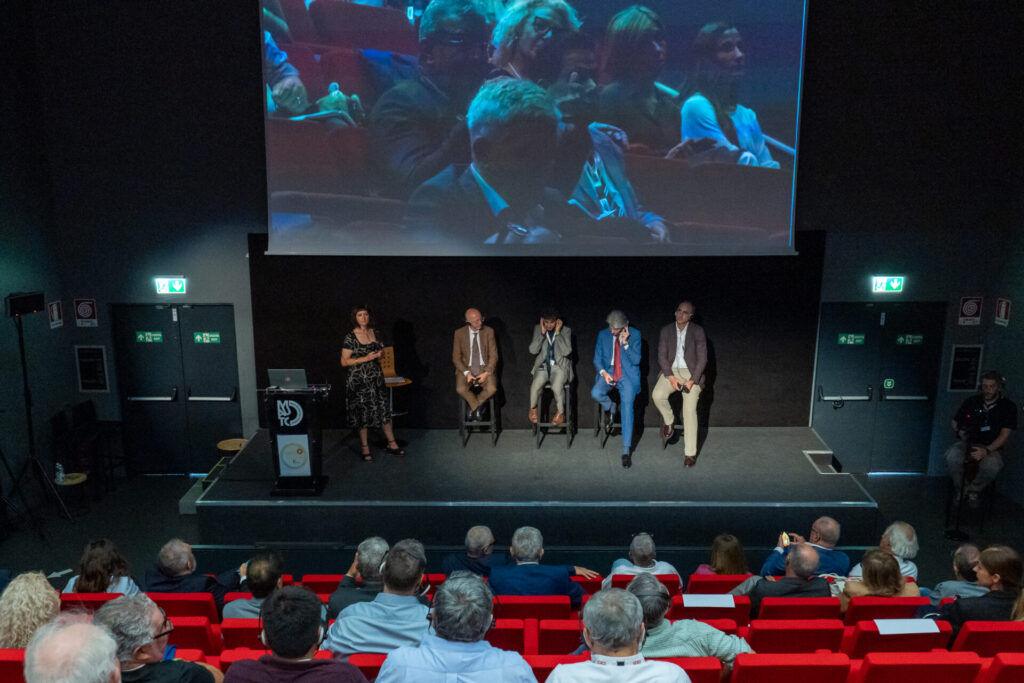
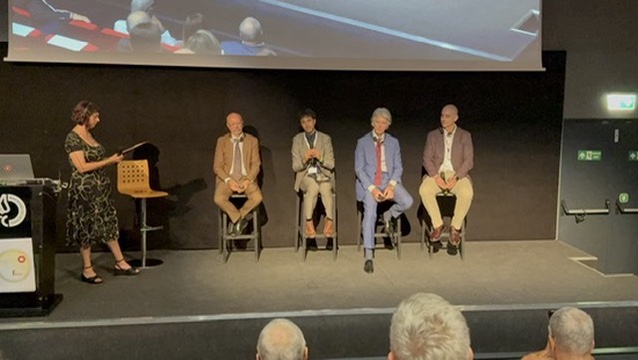
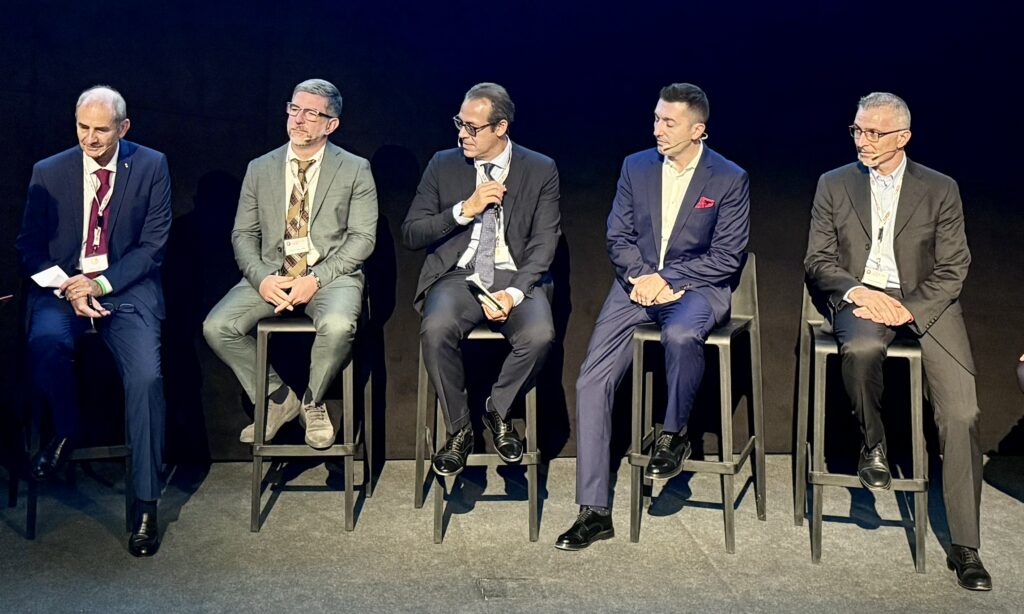
The day’s technical heart came in the form of a round-table titled: “Ocrim’s Vision for Mills: Rollermills, Purifiers and Plansifters with AI Applications.”
Moderated by Lorenzo Cavalli and Massimo Carpanelli, with presentations by Stefano Mazzini and Ocrim’s in-house specialists – Fabrizio Baccinelli, Marco Galli, Paolo Molinari, Emanuele Bigna and Simone Pedrini – the discussion explored how artificial intelligence can enhance modern milling operations.
The speakers stressed that the goal of AI is not to replace the miller but to amplify his or her decision-making power.
“AI should not take the miller’s place,” said Mazzini, “it should stand beside them – transforming data into insight.”
By harnessing the information already collected by plant systems, Ocrim aims to support predictive maintenance, improve energy efficiency and optimize production planning.
The audience’s engagement confirmed the appetite for practical, data-driven solutions that respect tradition. “Technology evolves,” one panelist said, “but the art of milling remains human. Our task is to make machines and data serve that art – not replace it.”
Service innovation and human connection
Later in the afternoon, Carolina Ghilardi and Valeria Monfredini introduced a lighter yet significant moment: the announcement of Ocrim’s new Ticketing Portal, launching in 2026. Designed to make after-sales assistance faster and more transparent, the portal allows clients to submit and track service requests with simplicity and precision.
“We know that when a miller needs support, they need it immediately,” Monfredini said. “Our goal is to make assistance quick, clear and efficient.”
Participants were invited to test a prototype by scanning a QR code, offering a glimpse of the streamlined service Ocrim plans to provide. The session ended with applause – a small sign that even incremental improvements can make a major difference in a miller’s daily operations.
A night at the Palace
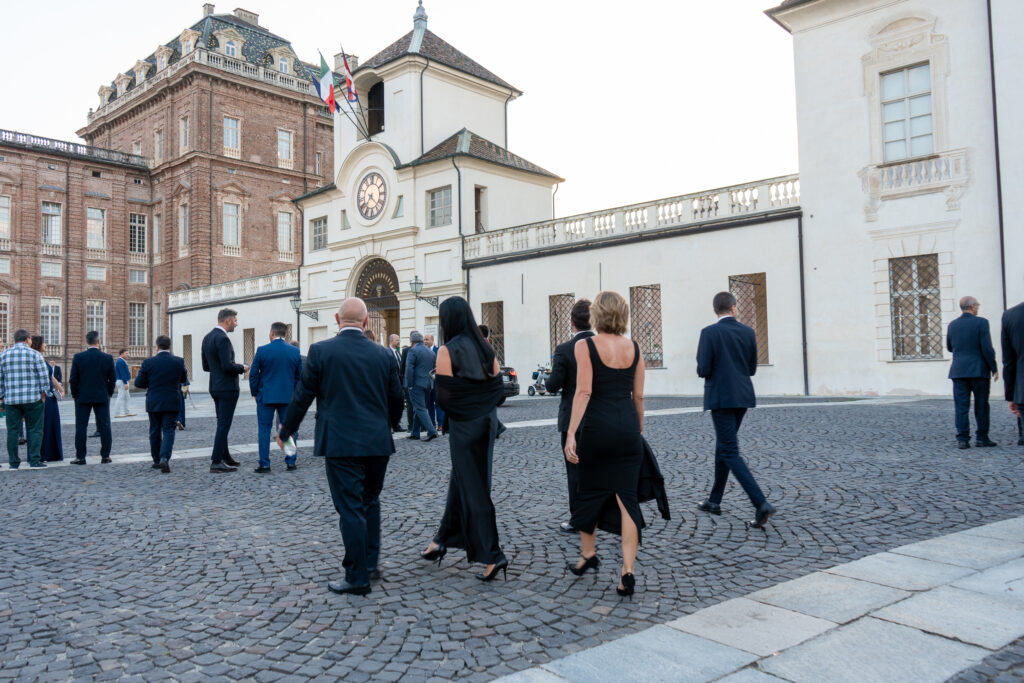
As daylight faded, the first day closed in splendour at the Venaria Royal Palace, one of Italy’s most majestic baroque complexes.
More than 220 guests gathered in the Galleria Diana, seated at a single 75-metre imperial table beneath frescoed ceilings and chandeliers. A string quartet played throughout the dinner, filling the hall with an atmosphere of timeless elegance.
The evening culminated with the Fontana del Cervo show – a symphony of water, light and music that reached nine metres into the air, synchronised to Beethoven’s Ode to Joy. It was an emotional finale, one that seemed to capture the event’s essence: a harmony between history, innovation and human connection.
A new beginning
The second day of Wheat, Flour and … 2025 once again unfolded within the luminous halls of Turin’s MAUTO – the National Automobile Museum. If the first day celebrated Ocrim’s roots and values, the second focused on what lies ahead – markets, technologies and the moral compass of the milling world.
The morning opened with Stefano Mazzini, Ocrim’s Director of Sales, Marketing and Communications, presenting the company’s new corporate video for 2025 – a moving reflection on 80 years of innovation.
“This anniversary,” Mazzini told the audience, “is not a finishing line but a starting point. Because every day – and not just on major occasions – is unique and significant for us. Every day brings value, commitment and passion.”
The film, voiced by actor and director Ricky Tognazzi – himself a native of Cremona, Ocrim’s birthplace – intertwined historical footage with contemporary images, evoking the rhythm of an enterprise that has evolved without ever losing its sense of identity.
“We wanted a voice that could speak both to memory and to the future,” Mazzini said. “Ricky’s link to Cremona made that connection natural.”
The video’s text, written by Ocrim’s own employees, became a portrait of the company as a living family – made of “good days and bad days, like any other family,” as Mazzini noted before screening.
The closing sequence, narrated by Tognazzi in both Italian and English, celebrated the courage to begin again – to see 80 years not as an archive but as an ignition point.
Reading the numbers: A world in transformation
After the emotion of the film, Mazzini turned to the language of data – a presentation rich with insight for millers and agri-industrial players.
“In 2024,” he began, “the global flour business reached a total value of 174 billion dollars. The forecast for 2033 points to 260 billion – an increase of more than five percent per year.”
The drivers of this growth, he explained, are clear: population expansion – with projections of 10.6 billion people by 2080 – rising consumption of bread, pasta, baked goods and noodles, and national policies encouraging access to flour-based products. “It’s not just demographic growth,” Mazzini observed. “It’s cultural evolution – the way people’s eating habits are changing, influenced by migration and global taste.”
Taking Italy as a reference point, he illustrated how the structure of the milling sector has transformed.
“In 1984, Italy had 1053 wheat mills,” he said. “By 2021, that number had fallen below 300 – a decline of more than 70 percent. Yet, in the same period, total milling capacity decreased by only five percent.”
This apparent paradox – fewer mills, but stable capacity – reflects a global consolidation trend. “We are producing more with fewer plants,” Mazzini noted. “Efficiency, scale and technology are defining competitiveness. But it also means we must safeguard the craft, the human intelligence that keeps our product authentic.”
He pointed to the diversification of the cereal-flour market as another defining change.
“A few decades ago, the shelves showed three colours: corn, rice and wheat,” he said, gesturing toward a multi-coloured graph. “Today the palette is full – barley, spelt, oats, millet and many more. Migration flows and changing lifestyles are reshaping consumption. Twenty years ago, you could hardly find noodles in an Italian supermarket. Today, they’re everywhere. This diversity challenges us – and it inspires us.”
Turning to resilience and risk, Mazzini addressed the lessons of the pandemic.
“Before 2020, global markets operated in a fluid, just-in-time model. Costs were stable; raw materials were easy to source. After Covid, everything changed. The companies that adapted quickly – those that secured short supply chains and local stocks – proved the most resilient.” The message to millers was direct: future competitiveness will depend on agility, not just scale.
Strategic growth and shared values
Mazzini also revealed two strategic developments that mark a new phase in Ocrim’s expansion. The first is a minority stake in Meyer Italy, one of the global leaders in optical sorting technology.
“Our collaboration with Meyer,” he explained, “will accelerate the integration of advanced selection systems into our process lines. Precision in sorting means precision in quality – and that’s the future of milling.”
The second is the acquisition of Grespan Impianti, a Treviso-based firm with over 60 years of expertise in feed processing systems. The partnership signals Ocrim’s determination to strengthen its presence in the animal-feed segment, aligning with broader trends toward integrated food-chain solutions.
Annabella Grespan, CEO of Grespan Impianti, described the alliance as a meeting of kindred spirits.
“In Ocrim and the Antolini family,” she said, “we have found great allies – people who share our belief that technological innovation, sustainability, ethical principles and human relationships must go hand in hand.”
Logistics: The hidden engine
The focus then shifted to the conference ‘Logistics in Milling and Agro-Industrial Complexes,’ moderated by Eloisa Martino of Ocrim’s Communications Office.
The session unfolded as a journey from global transport routes to the heart of the mill. Andrea Valente, owner of Molini Valente and current president of Italmopa, offered a detailed overview of soft-wheat logistics in Italy, explaining how evolving trade corridors, port infrastructures and national storage policies are reshaping supply reliability.
Cosimo De Sortis, president of Italmopa from 2017 to 2021 and Senior Trader at Amber Srl, expanded the scope to global trade flows, pointing out the delicate balance between cost, speed and security in maritime logistics.
“Shipping isn’t just a commercial variable,” he observed. “It’s part of the food system’s backbone. Every delay at sea echoes in the price of bread.”
Stefano Zangheri of Paglierani Srl brought the discussion into the plant itself, explaining how end-of-line operations – packaging, palletising and traceability – have become decisive for both food safety and efficiency.
“Packaging is no longer a wrapper,” he said. “It’s a guarantee of integrity, hygiene and accountability. Every bag carries the reputation of a mill.”
The academic perspective came from Riccardo Accorsi, associate professor at the University of Bologna, who illustrated how digital tools can make logistics measurable and sustainable. He described emerging models of ‘circular logistics’ for the milling sector, based on energy recovery, route optimization and data-driven decision support.
“Sustainability,” Accorsi concluded, “isn’t a slogan – it’s an algorithm.”
The ensuing debate revealed strong engagement from the audience, confirming that logistics has moved from being a silent process to a strategic and ethical discipline. Efficiency, sustainability and transparency are now as vital to a mill’s reputation as the flour it produces.
A mark in time – “Ocrim’s 80th Anniversary” postmark
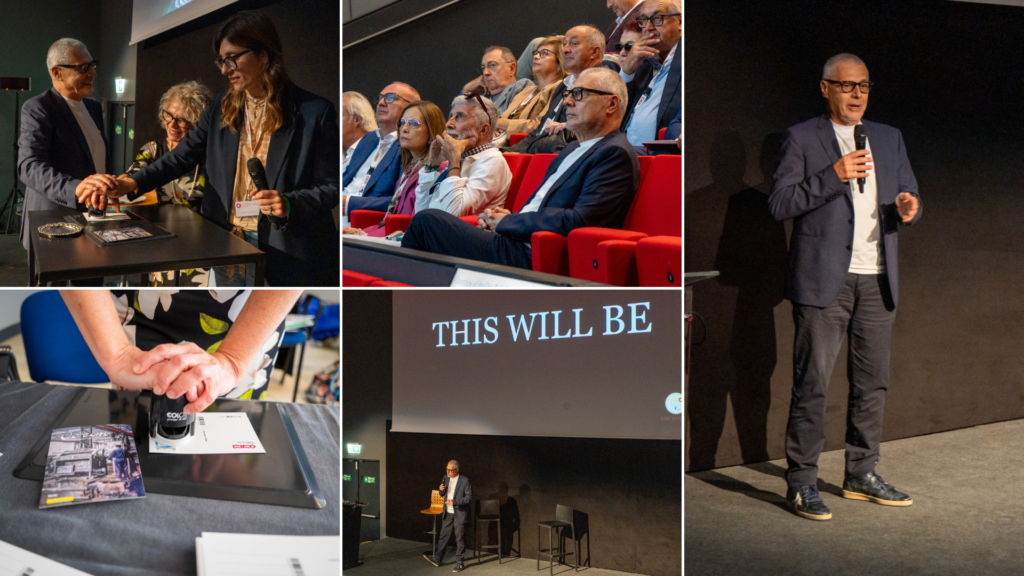
Among the day’s most symbolic moments was the philatelic cancellation ceremony, performed in collaboration with Poste Italiane.
Marta Latini of Ocrim’s Marketing Office presented the initiative, while CEO Alberto Antolini and Cremona Philately’s regional representative, Marcella Domenica Messina, carried out the postmarking.
“This postmark is not just a mark on a sheet of paper,” Antolini told the assembled guests. “It’s a sign that tells our story – connecting us with those who came before and encouraging us to look forward with renewed energy.”
He then handed the first commemorative postcard to his brother, Sergio Antolini, Ocrim’s president, who had been quietly present in the audience throughout.
Guests were invited to write personal messages on the postcards – an intimate gesture that transformed a corporate ceremony into something human and heartfelt. A few days later, the first of these cards, carrying the “Ocrim 80th Anniversary” postmark, found its way back to Cremona – a small circle completed.
‘This Will Be’ – From motto to manifesto
The afternoon returned to the theme that has run through every edition of Wheat, Flour and …: vision made tangible.
The new anniversary video, titled ‘This Will Be,’ condensed an entire year of celebrations into a visual narrative of work, tradition and anticipation. The title, as Antolini later explained, is more than a phrase – it is a declaration of intent.
“This will be,” he said, “means that the future is something we build, not something we wait for. In Latin, fiat means ‘let it be done’ – and that’s our daily attitude. We don’t talk about tomorrow; we make it.”
Following the screening, Mazzini presented a short video dedicated to the women of Ocrim – a spontaneous tribute filmed partly that very morning.
“We wanted to celebrate the strength and beauty of the women who build this reality with us every day,” he said. The audience responded with long applause – an emotional reminder that technology, for Ocrim, is never detached from humanity.
Between machines and memories
The afternoon continued with guided tours of MAUTO’s exhibitions, where guests explored the evolution of Italian automotive design – a living metaphor for Ocrim’s own journey. Watching vintage engines and aerodynamic prototypes, visitors drew parallels between car manufacturing and milling: both industries depend on precision, heritage and an unbroken thread of ingenuity.
As dusk fell, the celebration moved to Pralormo Castle, a few kilometres from Turin.
In the courtyard of the historic residence, guests enjoyed regional cuisine, local wines and an evening of live music, with a DJ and saxophonist adding rhythm to the autumn air.
Perhaps the most profound reflection of the day came not from the stage but from the audience itself. People from every continent – with different languages, cultures and beliefs – shared tables, ideas and laughter. In a world shaken by conflict and uncertainty, the sight of so many individuals connected by mutual respect and curiosity carried a quiet but powerful symbolism.
In that moment, the true essence of ‘Wheat, Flour and …’ became clear. Beyond markets, beyond machinery, beyond even the art of milling itself, the event was about the human capacity to create – to build bridges, to share knowledge and to keep faith in the simple, transformative power of work well done.