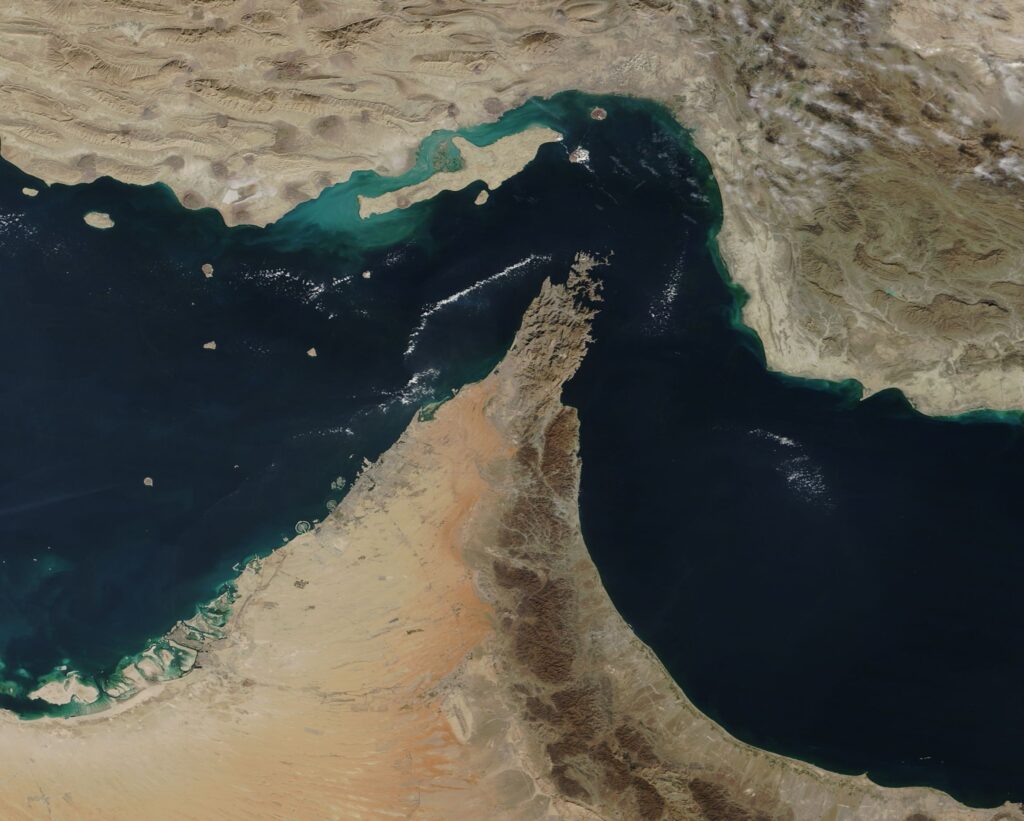



























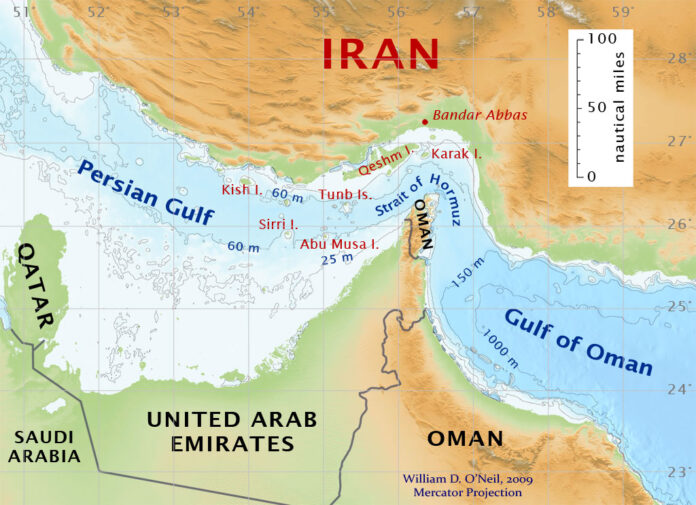
Strait of Hormuz shipping disruption has thrown global grain trade into crisis this week as major lines suspend transit following the outbreak of open conflict in West Asia, stranding vital shipments of rice, wheat, and barley destined for the Gulf region.
The US and Israel struck Iran on Saturday, killing its Supreme Leader. Iran has retaliated with a wave of attacks against Israel and US military bases across the region.
Shipping lines suspend operations, reroute vessels
The safety of crews and cargo has become the immediate priority, triggering sweeping operational changes. Hapag-Lloyd has suspended all vessel transits through the Strait of Hormuz until further notice, citing the “official closure of the Strait of Hormuz (SOH) by relevant authorities amid the evolving security situation.” The company warned that services calling at ports in the Arabian Gulf “may experience delays, rerouting, or schedule adjustments.”
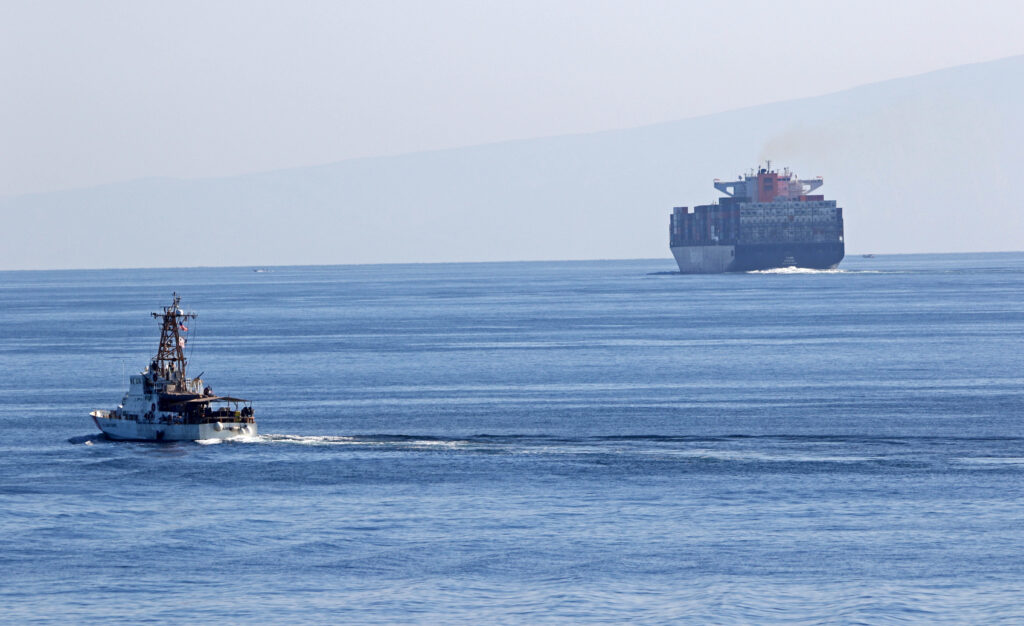
CMA CGM has taken even broader measures. The carrier has instructed all vessels inside the Gulf and bound for the Gulf “to proceed to shelter” with immediate effect. Crucially for grain shipments between Europe/Asia and the Middle East, CMA CGM has suspended passage through the Suez Canal until further notice, with vessels being rerouted via the Cape of Good Hope. Maersk has also announced it will divert vessels around the Cape of Good Hope rather than risk Suez Canal transit, adding thousands of miles and significant delays to grain shipments from Europe and the Black Sea to Asian markets.
In a development with severe implications for perishable and specialised agricultural cargo, CMA CGM has also halted all reefer (refrigerated container) bookings to and from a wide range of West Asian and Red Sea countries, including Iraq, Bahrain, Kuwait, UAE, Saudi Arabia, Jordan, and Egypt. This will directly impact shipments of temperature-sensitive goods like certain seeds, specialized ingredients, and processed foods.
Sarah Powell, Associate Director of Air Freight Services at Baxter Freight, a UK-based independent logistics specialist, said, “The fast‑moving situation in the Middle East is creating significant disruption across both sea and air freight networks. With the Strait of Hormuz now closed to commercial vessels and congestion building at major regional hubs, many carriers are being forced to reroute via much longer shipping lanes such as the Cape of Good Hope. This is extending transit times considerably and leading to the introduction of new surcharges as carriers absorb higher operating costs.”
Security situation deteriorates, insurance becomes critical
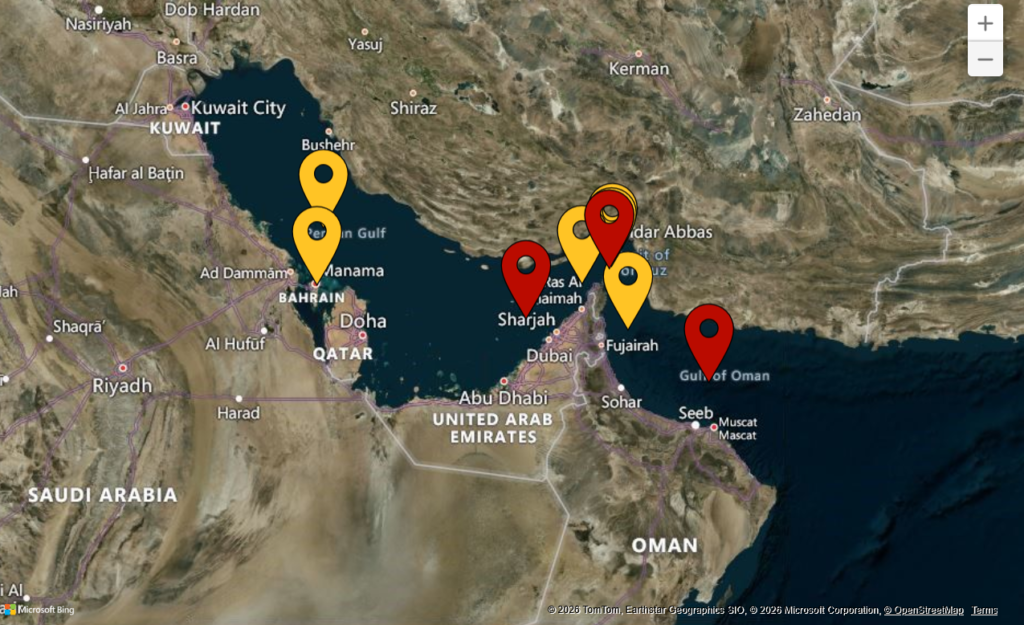
The security threat is immediate and escalating. The UK Maritime Trade Operations (UKMTO) has reported multiple incidents on March 2 alone, including a vessel in the Port of Bahrain struck by two unknown projectiles causing a fire, an explosion near a vessel west of Sharjah, and another strike north of Muscat, Oman. UKMTO has also warned of “significant military activity” and “potential for elevated electronic interference, including disruption to AIS and other navigational or communications systems” across the Arabian Gulf, Gulf of Oman, North Arabian Sea, and Strait of Hormuz.
Jakob Larsen, Chief Safety & Security Officer at BIMCO, issued a grave warning: “The US/Israeli attack on Iran dramatically increases the security risk to ships operating in the Persian Gulf and adjacent waters.” He noted that ships with business connections to US or Israeli interests are more likely to be targeted. Larsen expects insurance rates to “increase manyfold,” adding that ships with such connections “approaching the area are probably not going to be able to get insurance.”
The crisis is not confined to the Gulf. Larsen warned that “the Houthis are allies of Iran and may well decide to ramp up attacks against commercial shipping in the Red Sea and Gulf of Aden,” which would “exacerbate security threats” and “most likely cause some shipowners to reroute south of Cape of Good Hope.” This directly impacts the Suez Canal alternative already being adopted by lines like CMA CGM.
Indian rice exports in the crosshairs
The Strait of Hormuz shipping disruption poses an immediate and severe threat to global grain logistics, particularly rice. The Indian Rice Exporters Federation (IREF) has issued an urgent advisory to its members to “avoid fresh cost, insurance and freight (CIF) commitments for Iran and parts of the Gulf.” IREF is urging exporters to switch to Free on Board (FOB) terms, where the buyer assumes freight and insurance risks, to shield themselves from runaway costs.
The vulnerability is stark: West Asia and Africa together account for roughly 50% of India’s total rice exports. For premium basmati rice, the concentration is even higher, with the top five buyers—Saudi Arabia, Iran, Iraq, the UAE, and Yemen—all located in West Asia. IREF warned of “heightened volatility in basmati prices in the coming days,” with wholesale prices already 10-15% higher than a month ago.
A fragile global supply chain
With a significant portion of global rice, wheat, and barley flows dependent on these chokepoints, and with insurance and freight costs spiralling, the coming days will test the resilience of food importers across West Asia and beyond. Strait of Hormuz shipping disruption situation remains highly fluid, with carriers, insurers, and traders scrambling to assess risks and protect assets.