



























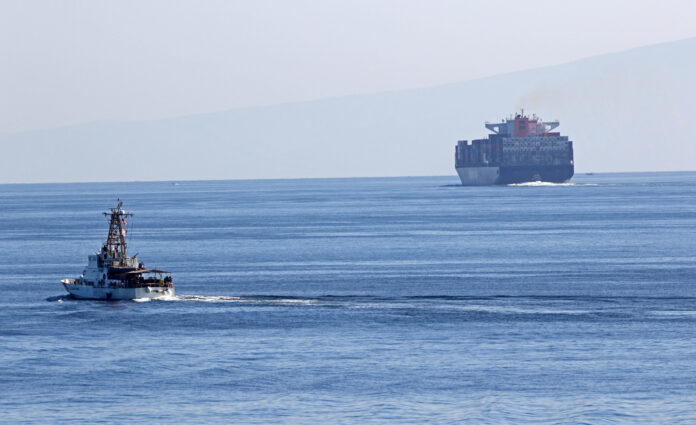
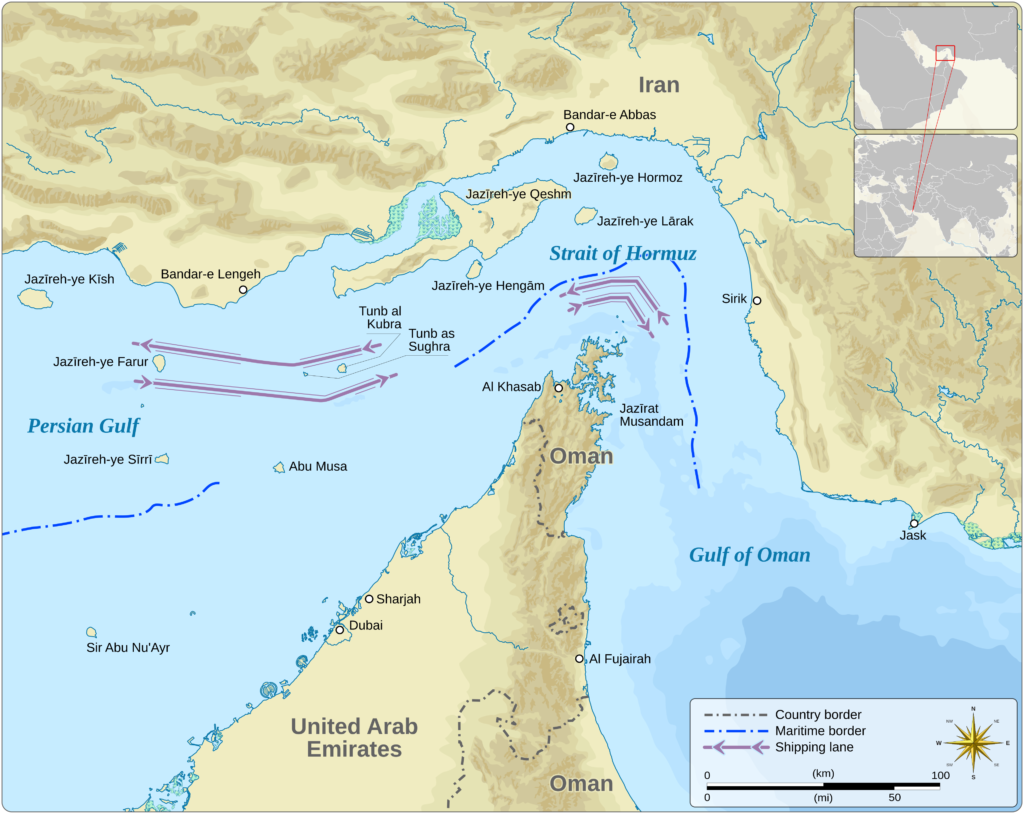
As the war between US-Israel and Iran enters its third week in West Asia, the effective closure of the Strait of Hormuz has disrupted global shipping networks, pushing up freight costs and raising concerns for the international grain and fertiliser supply chains. The new supreme leader of Iran, Mojtaba Khamenei, son of slain Ayatollah, has in his first statement said that the Strait of Hormuz will remain shut as a pressure tactic.
The strait — a narrow maritime chokepoint linking the Persian Gulf with the open ocean — is one of the world’s most critical trade routes. The disruption has already triggered significant volatility across energy, shipping and agricultural markets. The prolonged instability could affect global food prices and supply chains, warned Adrian Helfert of Westwood Holdings in an interview with a financial media website.
The region’s heavy reliance on imported cereals and oilseeds makes it worth monitoring closely.
Shipping disruptions and rising freight costs
Shipping lines and logistics providers report growing operational challenges across Middle Eastern routes, with vessels facing delays, diversions and additional surcharges.
According to freight specialists, the most immediate impact has been a rise in fuel costs and associated surcharges applied by shipping lines, airlines and trucking operators. Ian Baxter, Founder and Chairman of Baxter Freight, says: “The main impact comes from increases in fuel prices as we are seeing trucking suppliers, shipping lines and airlines impose fuel surcharges which need to get passed on to our customers and ultimately to consumers.”
These costs are increasingly being passed through the supply chain to cargo owners and ultimately to consumers. “The consequences … aren’t huge at the moment, … although things could look very different if the conflict continues for much longer or escalates in intensity or reach.” Ian adds.
Some carriers are diverting vessels away from the Gulf region entirely or rerouting longer voyages around Africa via the Cape of Good Hope, adding transit time and increasing freight rates.
At the same time, vessels and bulk carriers are beginning to accumulate outside the Gulf region as uncertainty around passage through the Strait of Hormuz persists. This congestion is adding further pressure to global shipping schedules and supply chains.
The disruption is also prompting operational adjustments by major carriers, including changes to booking policies, temporary container return arrangements and additional fuel surcharges.
Implications for global grain flows
Although only a relatively small share of global grain shipments passes directly through the Strait of Hormuz, the route remains crucial for supplying food to import-dependent countries in the West Asia.
According to S&P Global, the Gulf region is a major buyer of wheat, corn, barley and oilseeds, accounting for roughly eight percent of global seaborne agricultural bulk imports.
Many countries in the region depend heavily on imported food due to limited domestic agricultural production. Analysts warn that disruptions to shipping through Hormuz could therefore have significant implications for food security.
Last year alone, around 30 million tonnes of grain were imported into the Gulf region, with a large share of shipments entering through ports accessible only via the strait, according to Vietnamese mouthpiece Vietnam.vn. The war has significantly impacted basmati rice exports from India to West Asia.
Market analysts are already revising grain import expectations downward for several countries in the region. Forecasts from market intelligence firm Expana suggest cereal shipments could decline between five and 20 percent in the current marketing year if disruption persists, particularly affecting Iran, the United Arab Emirates, Kuwait and Qatar.
Some countries may rely on strategic grain reserves or alternative ports to mitigate the impact, but prolonged disruption would likely increase freight costs and extend delivery times.
Fertiliser markets under pressure
Beyond shipping logistics, fertiliser markets are also feeling the impact of the crisis.
The West Asia is a key exporter of fertiliser products and feedstocks, with significant volumes of ammonia, urea, sulphur and phosphate moving through the Strait of Hormuz each year.
Morgan Stanley estimate that roughly 30 percent of global fertiliser exports transit the waterway, making it a critical route for agricultural inputs worldwide.
Supply disruptions have already pushed fertiliser prices higher, raising concerns for crop production costs during the Northern Hemisphere planting season.
In response to tightening supplies, China has begun releasing fertilisers from national reserves earlier than usual. The China Agricultural Means of Production Association said in a statement that this is an effort to stabilise domestic markets and ensure availability for spring planting.
If supply constraints continue, higher fertiliser prices could ultimately affect crop yields and agricultural production later in the season.
Energy markets add further pressure
Energy prices are also climbing amid the crisis, adding another layer of cost pressure for agricultural supply chains.
Brent crude prices have surged above US$100 per barrel as markets react to fears of disrupted oil flows from the Gulf, despite Trump administration announcing a 30-day ‘waiver’ on Russian oil stranded at sea.
Because fuel represents a major cost component for shipping, grain processing and agricultural production, rising oil prices are likely to feed through to higher logistics and input costs across the grain sector.
Governments and international agencies are attempting to stabilise markets. The International Energy Agency has already announced a large, coordinated release of strategic oil reserves in an effort to mitigate supply disruptions.
Food security concerns
For the Middle East itself, the greatest risk lies in food supply.
Many Gulf states import the majority of their food and rely heavily on maritime trade through the Strait of Hormuz. Some countries may be able to temporarily offset disruptions by drawing on strategic reserves or using alternative ports, but prolonged disruption could create shortages and increase food price inflation.
The situation highlights the deep interconnection between geopolitical risk, energy markets and global food supply chains.
The coming weeks will be critical in determining whether the disruption remains a short-term logistical challenge or evolves into a broader supply shock affecting agricultural markets.