



























Cargill Micronutrition & Health Solutions has released its 2025 Global Mycotoxin Report, revealing continued high levels of contamination in feed ingredients worldwide.
The report draws on 389,926 analyses conducted across 41 countries, making it one of the largest global datasets tracking mycotoxin occurrence in feed and grain supply chains.
According to the findings, 71 percent of samples tested positive for at least one detectable mycotoxin, while 34 percent exceeded performance-based risk thresholds, levels associated with measurable impacts on animal productivity.
Among the toxins identified, deoxynivalenol (DON) remains the most prevalent and highest global feed risk, with 53 percent of analyses exceeding performance thresholds. Meanwhile, the report notes increasing risk from fumonisins (FUM) and continued high prevalence of zearalenone (ZEN) across multiple regions.
The study also highlights the growing challenge of multi-mycotoxin contamination, with 47 percent of samples containing three or more toxins. This co-occurrence complicates risk management for feed producers and grain handlers, particularly where contaminated raw materials may enter the feed chain.
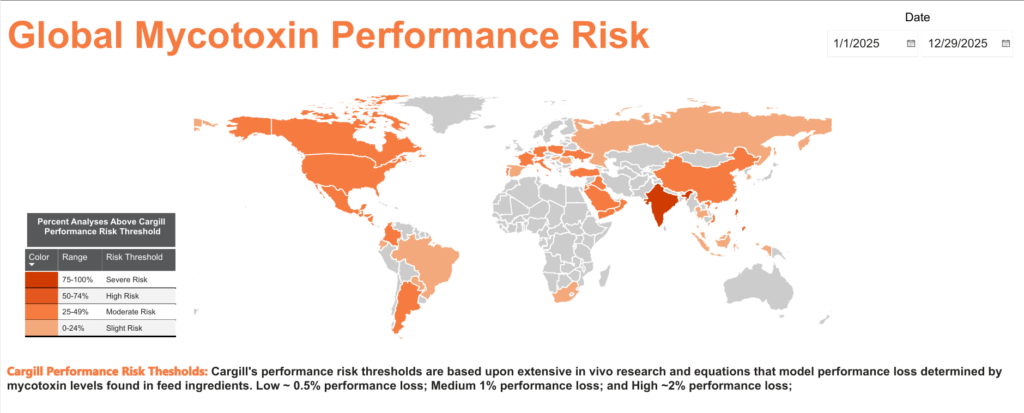
Regional trends revealed significant variation in toxin prevalence. High DON pressure was observed in North America and China, while parts of the Americas and Asia recorded elevated fumonisin levels. Persistent zearalenone contamination was reported across several European, West Asian and African markets, and aflatoxin pressure increased in parts of Asia.
Clement Soulet, Category Lead of Anti-Mycotoxin Agents at Cargill Micronutrition & Health Solutions, noted that producers are increasingly facing “multiple and regionalised risk patterns”, reinforcing the need for data-driven testing and mitigation strategies.
The full report is available here.