

























by Dr Chotima Poompramun, Technical Sales Manager, Dr. Eckel Animal Nutrition, Germany and Dr Bernhard Eckel, Vice President, Dr. Eckel Animal Nutrition, Germany
Animal husbandry often involves stressors that are not immediately apparent. These can result from environmental conditions or management-related factors that disrupt an animal’s biological balance (homeostasis) – and they always come at a cost. Reduced feed intake, impaired health and lower performance are typical consequences. It can even lead to changes in behaviour. The challenge is not only to react to stress but to manage it proactively and effectively.
A smart stress strategy therefore focuses on two goals: preventing stress where possible and reducing its impact when it occurs. Targeted nutritional support can play an important role here.
When stress becomes a real problem
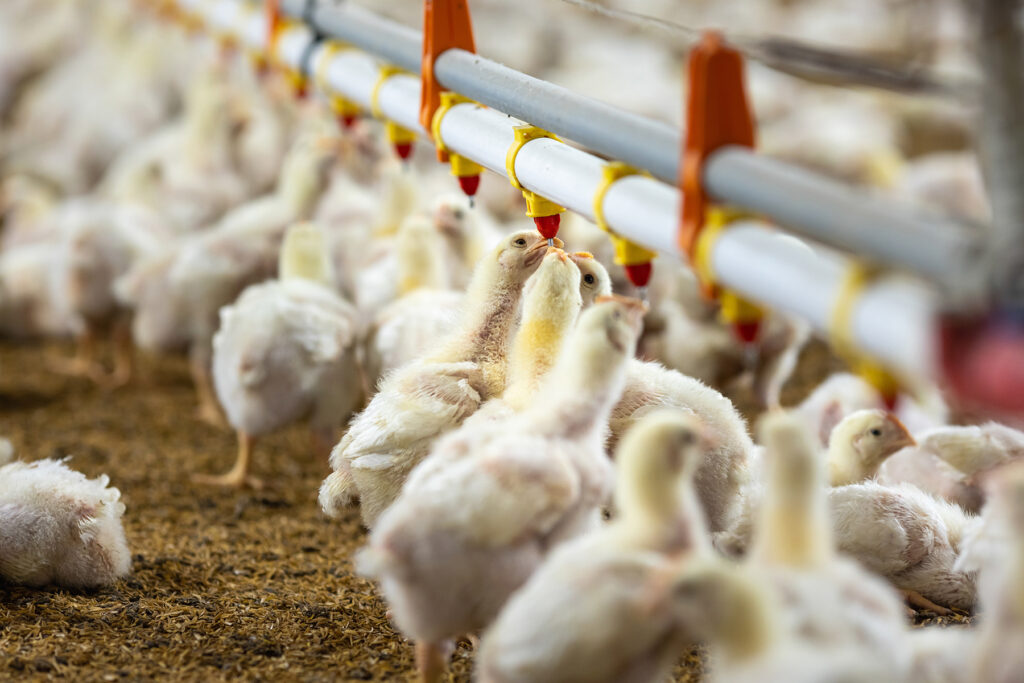
Stress occurs when animals can no longer maintain their internal balance. One increasingly significant stress factor is heat stress. Animals exposed to heat stress struggle to regulate their body temperature, especially when humidity is high. In environments with high humidity, the animals’ natural cooling mechanisms become less effective. Evaporative cooling – panting in birds and sweating-like behaviour in pigs – becomes far less effective because the air is already saturated with moisture. The result is often dehydration, electrolyte imbalance and increased oxidative stress. The immune system weakens, animals become more susceptible to disease and performance drops. In severe cases, mortality can increase.
Critical production phases can also place a considerable strain on the animals. During piglet rearing and pre-fattening, piglets are at increased risk of behavioural disorders such as tail-biting or ear-biting. This is particularly common when there are temperature fluctuations, pen changes or significant changes to their feed. Lesions, necrosis and inflammation are clear indicators of compromised animal welfare and can lead to significant economic losses. Despite the different triggers, the underlying mechanisms are similar. Stress disrupts physiological balance, increases metabolic strain and weakens resilience.
From reaction to prevention
Good management and housing conditions remain the foundation of stress control. However, they are not always sufficient – especially under challenging conditions such as high temperatures or critical production phases. Nutritional support can help stabilise the animal from within by supporting key physiological functions, reducing stress reactions and promoting calmer behaviour. MagPhyt follows this approach. Rather than focusing on individual symptoms, it supports the animal’s overall ability to cope with stress.
A multi-level approach to stress support
MagPhyt and the water soluble MagPhyt WS combine magnesium with other ingredients in a way that addresses different aspects of the stress response. Magnesium plays a key role in energy metabolism and nervous system regulation. During stressful phases, the demand for energy increases. Highly bioavailable magnesium sources help meet this increased demand and send a clear calm down signal to the nervous system and muscles.
Furthermore, animals produce more free radicals under stress, which can damage cells and tissues. The antioxidant components in MagPhyt help neutralise these compounds and limit oxidative stress. The phytogenic component adds another layer. Plant-based compounds can help modulate stress responses and promote calmer behaviour. Selected ingredients such as lavender are known for their calming effects on the nervous system and can support animals in stressful situations in a natural way.
Proven effects under practical conditions
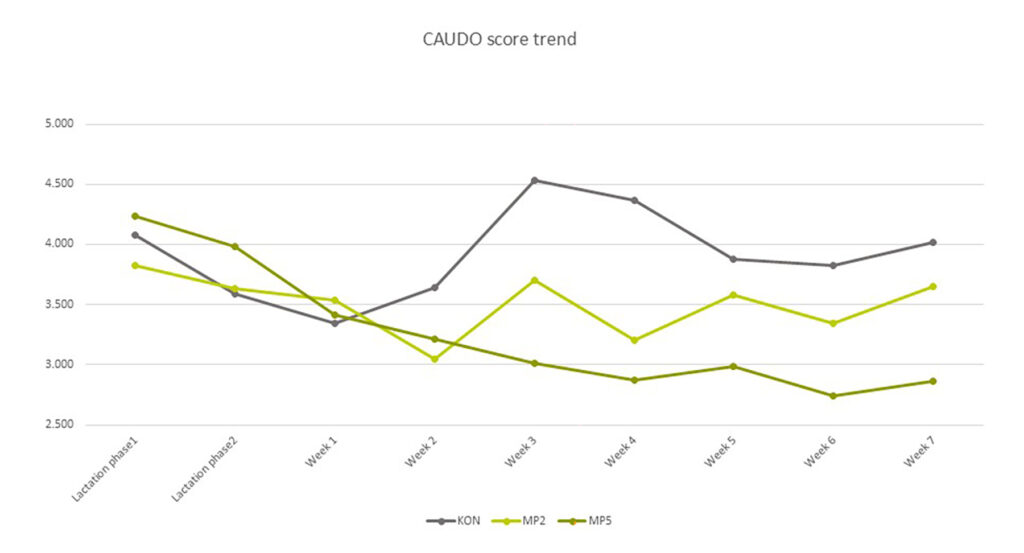
The effect of this approach has also been confirmed under field conditions. In a seven-week trial with undocked piglets, MagPhyt reduced stress-related injuries. Animals receiving the additive showed fewer ear lesions, less partial ear loss and an overall improved condition.
The CAUDO score, which assesses lesions, inflammation and necrosis of tails and ears, confirmed these observations. Both MagPhyt groups performed better than the control group, with the higher dosage showing the most consistent results. The differences were particularly clear in the critical weeks following weaning. Performance data followed the same pattern. Animals supplemented with MagPhyt achieved higher daily weight gains and improved feed conversion, highlighting the close link between animal welfare and productivity.
Stress management that pays off
The effects of stress are wide-ranging. Supporting animals during challenging phases can help reduce its impact significantly. Reducing stress is not only a matter of animal welfare but also a key factor for efficient production. A targeted nutritional strategy can make a measurable contribution. By strengthening resilience and reducing stress reactions, solutions like MagPhyt help animals remain stable even under challenging conditions.
Stress cannot be completely avoided in livestock production. But it can be managed. Prevention, early intervention and targeted support are key. Addressing both the physiological and behavioural effects of stress helps improve animal welfare and production results. MagPhyt provides practical support in this context.