



























by Kira Thomas, Milling and Grain contributor, UK
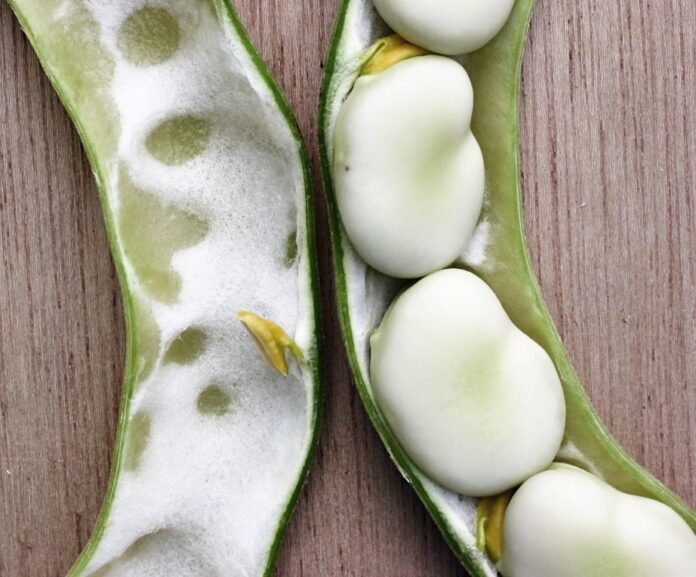
Faba beans, more commonly known as (fresh) broad beans, are a protein rich legume. They are mostly produced by China, Ethiopia and Australia, although can be produced in almost all countries during the correct seasons, which in the majority of countries, is early spring as the soil is workable.
Faba beans in feeds
Legumes, alone, are infamous for their richness in protein and healthy fats. However, Faba beans, compared to soybeans, are not as rich in oil- a major energy source. 77 percent of harvested soybeans are used in livestock; therefore it is important that an appropriate substitute should be used to replace soybean. This is due to the need to reduce huge demand and destruction, caused by soybeans, of rainforest in the Amazon and South-East Asia. Faba beans can be homegrown meaning mass deforestation in a concentrated area to grow soybeans can be reduced.
Faba beans can be widely used and introduced to the diets of both monogastric (pigs and poultry) and ruminant beef, dairy, sheep, goat) animals. They overpower soybeans in many nutritional values, so are becoming a good competitor.
The nutritional contents
Their crude protein concentration is 25 percent, and the amino acid profile is comparable to soybean (that is, they are rich in lysine and low in methionine). Thus, Faba beans combine well with corn and other cereals low in lysine and rich in methionine.
Faba beans have become more useful in the animal feed industry as those involved in the industry are looking for more ways to substitute soybean. The species of Faba- Vicia Faba (horse beans and field beans)- contain smaller seeds (fava beans) which are used for feeding livestock. They are a valuable source of protein, holding 25-33 percent protein, and energy with 40-48 percent starch and 7-11 percent crude fibre. They are also a good source of vitamins A and C.
Anti-nutritional factors in faba beans, such as tannins and trypsin-inhibitor activity, are not high enough in concentration to cause problems when faba beans are used within the recommended levels.
Faba beans for monogastric feeds
The protein digestibility and amino acid profile are the major determinants of the feeding value as the protein, like in ruminant feed, is highly digestible. The amino acid profile of the faba bean is that it is rich in lysine, but relatively low in methionine and cystine. The negative factor for the use of faba bean in poultry rations is the low content of methionine, which is vital for poultry growth. It is significant that you personalise your feeds for your animals as there are positive and negative impacts of all feeds and mixing and matching feeds in terms of what is most important for your animals is imminent for the quality of your livestock.
Although the mineral content of faba beans are similar to that of other cereals, like barley, they lack the higher phosphorus content that soy and rapeseed meal contain. Phosphorus is important in the general health of poultry animals like energy, carbohydrate, amino acid and fat metabolism, nervous tissue metabolism, blood chemistry and lipid transport.
A study at Aarhus University in Denmark aimed to evaluate the value of feeding faba beans to piglets and they found that three experimental groups- who received variations of dry feed with faba beans- were just as good or even exceeded results in the control group of piglets- who received soy-based feed. In conclusion, the experiment showed that the 25 percent of faba beans added had, overall, a positive impact on the piglets.
Faba beans for ruminant species
Faba beans are fed to beef cattle as an alternative to lupins. They have a low starch level which result in a better source of protein than cereal grains- starch is good in terms of milk yield and other factors, however should be given with wariness as to the amount as it can increase the risk if rumen acidosis. Faba beans should be introduced gradually into the cattle’s diet to prevent poisoning from diet change. The Protein in faba beans is extensively and rapidly degradable in the rumen, and this characteristic needs to be accounted for when formulating diets. Values of five percent for calf and lamb diets and up to 20 percent in dairy cow, beef cattle and ewe diets have been suggested.
Faba beans have a relatively long growing season and are tolerant of the frost when they are just seedlings, however cold temperatures may kill them when they are in later stages of growth. Cooler temperatures are perfect for the prosper of these crops.
Furthermore, Faba beans do not need roasting as they do not contain anti-nutritional enzymes. They can be conveniently homegrown as they contain little oil.
Faba beans have been proved to be a positive implementation
Sunnydale Foods is a producer of protein, starch and fibre from pea and Faba beans based in Saskatchewan, Canada. This company is working on increasing the protein content in the ingredient from 65-80 percent, which is more than soybean, therefore a large competitor to the use of soybean.
Faba beans have also been used to improve the growth of other crops. For example, in Australia, it was reported to contribute 270 kg/ha of nitrogen to the soil, resulting in increasing yields and protein content in the following wheat crop.