

























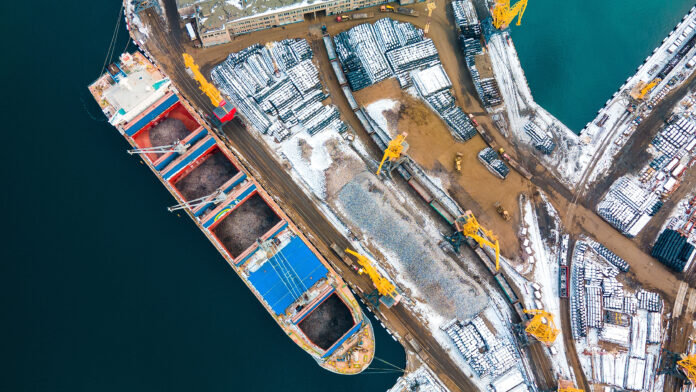
Approximately 90 percent of shipowners have suspended vessel calls at Ukraine’s Black Sea ports following an escalation in Russian missile and drone strikes on port infrastructure and merchant vessels, effectively paralysing the country’s grain export corridor during the peak harvest season.
Ukrainian Agriculture Minister Taras Vysotskyi confirmed on 23 July that vessel traffic had ground to a halt at Black Sea ports for agricultural exports. The decision to suspend operations stemmed from shipowners’ security concerns rather than government-imposed restrictions.
“Many shipowners are no longer authorising their vessels to enter Ukrainian ports because of security risks,” Oleh Khomenko, CEO of the Ukrainian Agribusiness Club (UCAB), told the Kyiv Independent. “Only vessels that entered the ports before the latest escalation remain there for loading, while new arrivals are very limited.”
Infrastructure and cargo losses
The Black Sea port attacks have caused extensive damage to critical port infrastructure and grain storage facilities. Ukraine’s largest agricultural exporter, Kernel, reported that a Russian attack on 14 July damaged approximately half of its sunflower oil transshipment terminal in the Odesa region, destroying around 25,000 tonnes of sunflower oil belonging to Kernel and a US company.
Earlier attacks on 10–12 July damaged Kernel’s port assets in Chornomorsk, destroying or severely damaging grain silos and sunflower oil storage tanks, resulting in the loss of approximately 45,000 tonnes of wheat and 9000 tonnes of sunflower oil.
Impact on global grain markets
Ukraine is one of the world’s largest exporters of corn and wheat. According to the Kyiv Independent, the grain corridor handles approximately 90 percent of Ukraine’s agricultural exports, which generated US$22 billion last year. The current Ukraine Black Sea grain corridor disruptions have reduced the country’s grain export capacity by roughly one-third.
Grain shipping freight rates have doubled over the past week, with the cost rising from about US$24 per metric tonne to approximately US$47 per metric tonne.
Shipping giant Maersk pulled its feeder service to Chornomorsk Fishing Port on 22 July, citing security concerns following Russian attacks.
Between 20 June and 20 July alone, Russia attacked 28 civilian vessels in the ports of Greater Odesa, killing 21 people and injuring 34, according to Inna Verba, spokeswoman for the Odesa Regional Prosecutor’s Office.
Industry and international reaction
The All-Ukrainian Agrarian Council (VAR) warned in a public statement on 10 July: “If the terminals lose their ability to recover quickly, exports will collapse, storage facilities will overflow and farmers will be left without the working capital needed to finance the next planting season. That would threaten the food security of both Ukraine and the world.”
The Turkish Shipowners’ Association issued a statement of condolence and condemnation, saying: “Seafarers, regardless of their nationality, flag or employer, are the unsung heroes of international maritime trade. No seafarer should ever become a target of armed conflict.”
President Volodymyr Zelensky stated that Russia is attempting to choke the corridor, having targeted every vessel approaching Ukraine on 22 July. Ukraine’s acting foreign minister has called for an urgent UN Security Council meeting following the attacks on civilian cargo ships.
Buyers who relied on Ukrainian grain are expected to pivot toward South American markets, with wheat and corn futures likely to experience volatility as the disruption extends into the harvest season.