
























by Jerad Heitzler, Training Manager, Martin Engineering, UK
Injuries and deaths from conveyor accidents have generally plateaued since 2015 compared to 20 or 30 years ago, when the annual number of worker fatalities was nearly 400 times what it is today. Safety experts attribute some of the decrease in injuries and fatalities in the past decade partly to stringent regulation and reporting by the Occupational Safety and Health Administration (OSHA). Contributing factors also include modern safety-minded equipment designs and operators addressing the root causes of injuries in bulk handling environments rather than treating the symptoms.
According to industry expert R. Todd Swinderman, there are five root causes of conveyor injuries: a ‘production first’ culture, ‘low bid’ purchasing, overly complex designs, too many rules, and understaffed or undertrained personnel. He pointed out, “A survey of the literature shows that companies who truly focus on safety are more productive, operate cleaner and safer facilities than their competitors, and have a higher share price.”
Preventable conveyor injuries
“Reduced workplace injuries and fatalities is a positive trend, but there are still predictable and preventable injuries happening,” said Dan Marshall, product engineer at the company. “The goal of our Production Done Safely philosophy is to help bulk handlers achieve the greatest amount of production at the lowest cost of operation with the least number of injuries possible. We accomplish that through awareness, extensive training and safety-conscious equipment design.”
The following examples display common injuries that could have been prevented through several established safety methods. Beyond the tragic loss for the workers and their loved ones, the companies where the fatalities occurred were heavily fined. Consequently, some are also enduring ongoing litigation, serious morale issues and higher-than-normal turnover as a result.

An unfortunate beginning
A 33-year-old worker was cleaning spillage around a running conveyor system at a facility in New Jersey. Listed as a temporary non-union worker, he got too close to the moving belt, and a piece of loose clothing came in contact with the belt, dragging him into a pinch point. He was strangled with the fabric before aid could be administered or the system shut down. This incident resulted in US$36,500 in fines from OSHA.
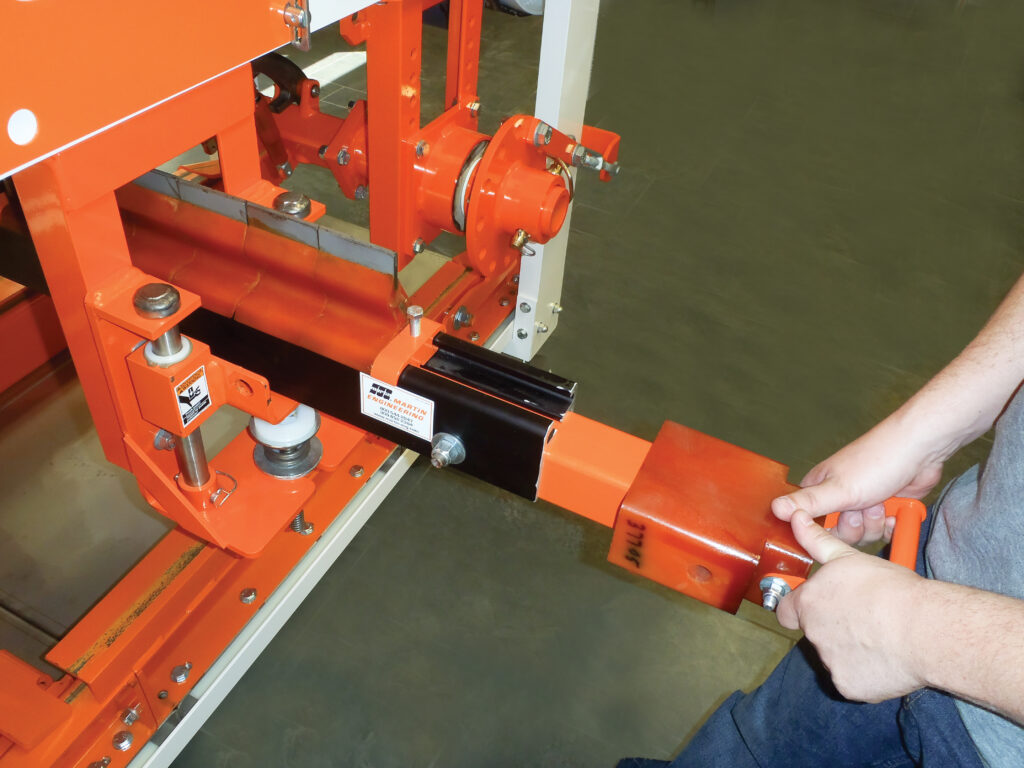
There were several details left out of the public report. One is the presence of guarding around the belt, which prevents limbs and objects from crossing the plane of the system. Guarding is designed with mesh that prevents incidental contact but allows for inspection. Often there is a procedure required to remove guarding, and in some cases, removal triggers an automatic shutdown of the system.
It was not revealed in the report how much training the individual had received, but a trained worker would have been aware of the hazards around a moving belt regarding loose-fitting clothing, long hair, etc. Also, the presence of a buddy or supervisor is unknown, but the implementation of work teams might have allowed a faster response to shut off the system or free the worker before asphyxiation occurred.
A fast conveyor
A 49-year-old worker in Illinois was using a broom to clean dust and spillage around the conveyor feed pit leading to a moving conveyor transporting dried manure to a transfer point. The worker accidentally slipped and fell onto the belt. He was quickly conveyed 100 feet to the blade cleaner at the discharge point, where he suffered multiple life-threatening injuries and later died. According to the report, the employer was initially fined US$66,794 but was able to settle with OSHA for US$30,000.
Conveyors in full production mode often move so fast that they can exceed the reaction time of even a highly trained athlete. When faced with a situation where a worker suddenly contacts the cargo side of the belt, the only hope may be another worker making it to the shutoff switch in time.
The report cited the presence of a guardrail but did not specify the circumstances by which it was crossed. However, the best practice is to prevent as much dust and spillage discharging from the system as possible, then clean safely during scheduled downtime. Employers can mitigate excessive dust and spillage by installing equipment specifically designed for sealing the conveyor belt and controlling emissions.
Accounting for injuries
The importance of protecting workers should be the top priority for any employer. The loss felt by family and coworkers after a workplace fatality can weigh heavily on the community and the staff, not to mention the financial consequences. Thus, investing in equipment and training that protects workers from injury and illness is essentially investing in the community and the company culture.

In its 2002 white paper, the American Society of Safety Engineers (ASSE) concluded a direct, positive correlation between investment in safety, health and environment (SH&E) and its subsequent return on investment (ROI). The organisation reported that of the American business executives polled, 95 percent believed workplace safety also has a positive impact on a company’s financial performance. The same poll revealed that 61 percent believed their companies received an ROI of US$3 or more for each US$1 they invested in workplace safety. Calculating these costs is specific to each operation, but in general, they can be broken down into ‘direct costs’ and ‘indirect costs’:
Direct costs are explicitly associated with the accident or illness. In general, these include fines, medical bills, insurance premiums, indemnity payments and temporary disability payments. Indirect costs include a variety of other expenses resulting from the incident. They include:
- Cleanup time and product loss
- Equipment repair or replacement
- Purchase or installation of safety components
- Overtime to fill in for the missing worker
- Cost of hiring, training and equipping new employees
- Legal fees and litigation costs
- Increased insurance premiums
- Production delays and missed shipment targets
- Reduced employee morale, greater absenteeism
- Negative publicity
- Increased scrutiny by regulators
Recovering from an accident
“Tallying the direct and indirect costs, the impact of an accident on a company’s bottom line can be devastating,” said Marshall. “Safety rules aren’t maliciously created to complicate operations or limit profit. When taken into account, they actually improve a company’s bottom line.”
To demonstrate the benefit of safety to a company’s bottom line, OSHA created the online tool ‘Safety Pays,’ which uses company-specific economic information to assess the potential economic impact of occupational injuries on that firm’s profitability. The program estimates direct costs (claim cost estimates provided by the National Council on Compensation Insurance) and indirect costs (provided by the Stanford University Department of Civil Engineering) and weighs them against financial details supplied by the company.

Return on Prevention (ROP)
The commonly used ROI model is calculated against a time frame in which the capital expenditure on new equipment is recaptured by the improvements. If a proposed project is within the budget expectations and has a payback period of less than one year, it is usually approved by plant management.
“The problem with the ROI model is it requires someone to get hurt to provide a benchmark for calculating return, and that’s not a reasonable point of entry,” Marshall explained. “Using OSHA’s Safety Pays tool to provide a cost model to calculate the ROP is a far more practical approach.”
Working with abstract numbers implicitly creates pushback, making it more difficult for safety-conscious managers to obtain approval for their proposals. But the hard costs of worker injuries and fatalities are very real. The ROP model expresses the direction and strength of occupational safety and health programmes in helping to achieve company goals.

Safety is key
The death or injury of a worker in a conveyor accident is always tragic. Investigations usually reveal the incident could have been partially or entirely prevented with practical and cost-effective safety improvements. The ROP on durable, well-designed conveyor accessories and professional training not only makes good financial sense but also produces a culture of safety that ripples throughout the company’s balance sheet.
Published in the March 2025 issue of Milling and Grain