

























by Christian Rabe, Applied Feed Technology, Evonik
Homogenously mixed feed is essential for livestock performance, as it ensures that all added nutrients are available within every feed ration. These essential and low-dosed ingredients, which include vitamins, trace elements, minerals and amino acids, must be available in the right amount within each final feed pellet.
The impact of mixing homogeneity, expressed as coefficient of variation (CV) on important livestock performance factors can be seen in this study, which was conducted with 240 Ross broilers in a 42-day grow-out period.
Factors that influence mixing homogeneity
The efficiency and the profitability of the production of live animals will be directly impacted by the homogeneity of mixed feed. With better feed homogeneity (10 percent CV vs 30 percent CV) there was a moderate improvement in feed intake and feed conversion rate. At the same time, flock homogeneity improved significantly which is an important economic factor.
As a rule, homogenous feed mixes with a CV of five per cent or below can be technically achieved under commercial conditions and are considered as optimal for livestock performance, particularly poultry. In this context, it is important that the analyte and assay which are being used for assessing homogeneity are suitable, sensitive, and accurate to pick up the variation. Table 2 contains the CV rankings of the feed additives found in finalised feed that is commonly used.
In regular feed production, mixing homogeneity is sometimes not managed well. Of nearly 100 commercial feed mixers tested, approximately 51% had mixing CVs less than 10%, whilst 19% of the mixers had CVs greater than 20%.
There are numerous factors influencing the mixing homogeneity of final feed. One important factor is the incorporation of liquids. Even below an addition rate of three percent, special care must be taken to achieve results comparable to the dosing of dry ingredients.
The added liquids should be mixed longer than the dry ingredients to ensure homogeneity and to break up agglomerates that will have formed. There is the risk that if the dosing technique for liquid addition is suboptimal, small lumps might form which are not dissolved during the mixing process, eventually leading to larger agglomerations.
To break up the lumps and increase mixing homogeneity, high-speed paddle mixers with spraying systems suitable for the dosed product are required. The positioning of liquid additions into the mixer and the additional wet mixing time are important to achieve homogeneity of the final feed. In order to prevent poor mixing results, liquid dosing systems also require additional cleaning and nozzle maintenance (Clark, 2009).
With the time required for spraying liquids, optimal mixing time is often compromised whilst not extending batch time or reducing mill throughput, which typically leads to poorer mixing quality.
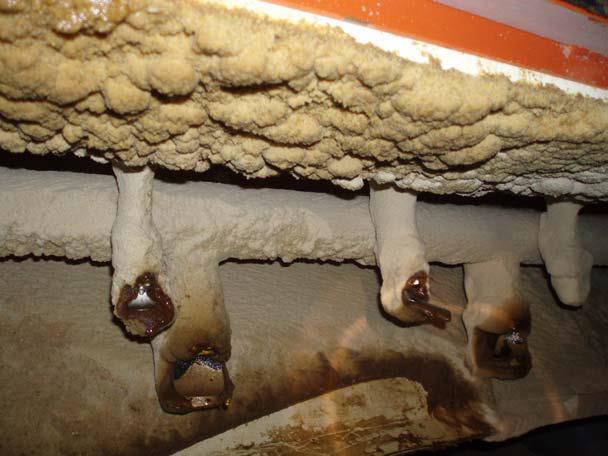
It is critically important that the liquid spraying system is being operated and maintained with care to avoid fouling, which will reduce mixing homogeneity and result in under-dosing of the product with grave consequences for livestock performance.
Attaining a uniform mixture
In general terms, materials that are similar in size, shape and density are more conducive to attaining a uniform mixture than dissimilar materials, like solids and liquids.
The flowability of solids is also crucial for a homogeneous feed mixture that also increases the moisture of the mixture whilst also negatively influencing the mixing homogeneity by reducing the flowability of solids (Shenoy 2015).
Long-term studies at Evonik Industries (Figure 1) indicate that a higher percentage of mixers did not achieve acceptable mixing quality than those that did. On average, the addition of liquid amino acids also resulted in lower recovery of the product in the final feed, as well as poorer mixing homogeneity.
These long-term tests were conducted under field conditions with different mixer sizes, equipment designs, filling levels, feed types and supplementation rates. The overall results were statistically evaluated for the CV of the supplemented amino acid, in order to evaluate the mixing homogeneity.
The lesser mixing homogeneity observed with adding liquid amino acids may be due to different factors including too-short mixing time, poor placement of the liquid inlet, simultaneous dosing of powder and liquids or suboptimal mixer technology.
However, achieving good mixing results with the addition of liquids is possible but this process does require particular care with regards to the design, maintenance, and cleaning of the dosing and mixing system.
Therefore, minimising the addition of liquids and relying mostly on dry ingredients and additives remains, in comparison, a more robust concept.