
























by Em Prof Fred Brouns, Maastricht University, Netherlands; Prof Peter Shewry, Rothamsted Research, Harpenden, UK & Prof Daisy Jonkers, Maastricht University, Medical Center, Netherlands
Comparisons are often made when marketing different types of grain and bread. In particular, artisan bakeries strongly market “ancient wheats” (spelt and emmer) as being special in terms of nutrient composition and digestive tolerance. Similarly, sourdough bread (often produced from ancient wheats) is often claimed to be more digestible and more nutritious. But are such claims supported by scientific evidence? When comparing types of grain and bread it is essential that all factors that may affect composition have been controlled, with only one factor differing (such as only the grain type or processing method) and this is often not the case. This will put into perspective below.
Grain composition
Grain composition is determined by three factors. Firstly, the genetics of the grain type, with differences occurring both between and within types of wheat. Secondly, environmental factors, including climate and weather (including rainfall and temperature), soil type and composition and agronomic treatments (notably fertilization). Thirdly, the interactions of environmental factors with the individual crop genotype. These factors strongly influence the composition of wheat grains, including the contents of proteins (gluten and amylase/trypsin inhibitors (ATIs)), phytochemicals (including antioxidants), vitamins and minerals, and fermentable oligo- di- and monosaccharides and polyols (FODMAPs).
Processing
Components present in the wheat grain can undergo changes during milling, dough making and baking. In particular, the type of sourdough and yeast used for fermentation may affect the degree of degradation of proteins and carbohydrates, including FODMAPs, and may also lead to the formation of new components. The application of heat during baking may lead to the formation of maillard- (browning) products (including acrylamide) and also denature and inactivate enzymes and other proteins. Consequently, it is essential that the breadmaking process is strictly controlled to ensure that the products are comparable. The “Well on Wheat?” project therefore compared bread wheat, emmer and spelt monitoring the entire process from the grain to the consumption of bread, using the following criteria:
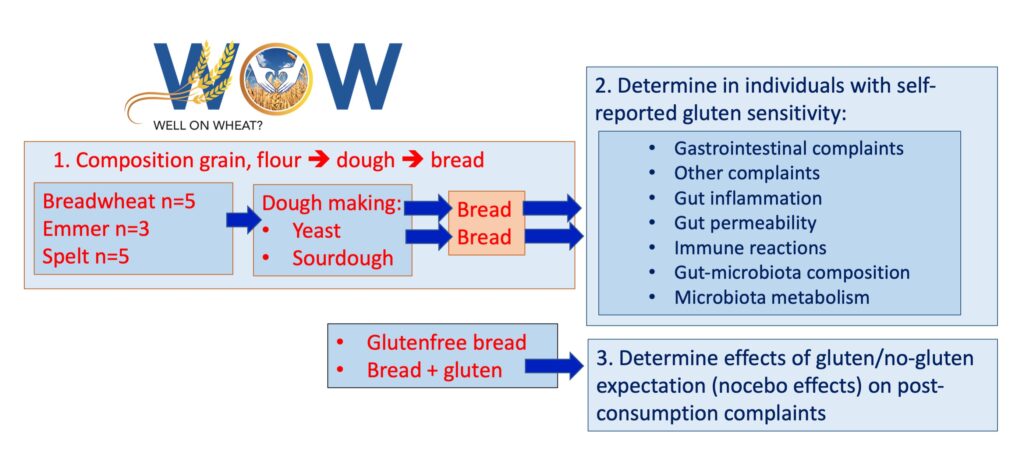
All grain samples (emmer, spelt or bread wheat) were genetically pure, based on visual checks and protein gel electrophoresis. Commercial samples of several (three or five) varieties of each cereal type were blended to even out differences in composition due to variation between individual genotypes of the three wheat types and the effects of environment.
The blended samples were milled into wholemeal flour under the same conditions.
The recipes used for dough making and the conditions for fermentation and baking were standardized allowing the reproducible preparation of bread for the studies Samples of the blended flours, doughs and bread were taken, stored and analyzed under identical conditions (same personnel and equipment).
By controlling these factors, it was possible to compare the compositions of the three wheat types and the effects of processing on these. Figure 1 provides a brief schematic overview of the most important steps.
The test samples
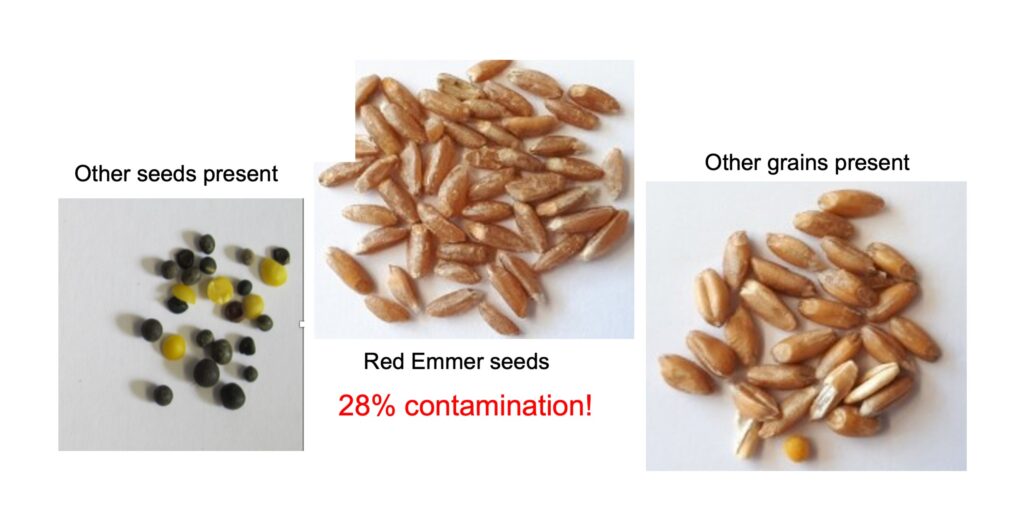
The initial objective was to purchase 200 kg of five varieties each of emmer, spelt and bread wheat from certified suppliers and blend the samples before milling and breadmaking. However, we were only able to obtain such large samples of three varieties of emmer. Furthermore, one of the emmer samples was found to be highly impure (with 28 percent presence of other seeds) and was replaced by another sample of the same variety. This confirms the importance of ensuring that grain samples used for comparisons are pure.
Extensive preliminary studies of dough recipes and processing conditions were carried out by the Dutch Bakery Center. In particular, the most appropriate type of commercial sourdough culture was selected from four types and the optimal concentration was determined. This allowed the compositions of the products to be standardised and their quality to be optimised for human intervention studies.
Results
Three replicate samples of the blended wholemeal flours and of both the yeast and sourdough doughs and breads (both made in triplicate) were analyzed for the contents of a range of components including dietary fibre, total protein (measured as nitrogen x 5.7) and individual proteins, mineral micronutrients, fructans and polar metabolites which included sugars, organic acids, sugar alcohols and amino acids. In many cases the contents of the components present in the replicate samples over-lapped between the three types of cereal and two types of products (yeast and sourdough). Nevertheless, some differences were observed. In particular, the bread wheat samples (flours, doughs and breads) had the highest contents of total dietary fibre and arabinoxylan (the major fibre components) and emmer the lowest contents of these components (Figure 3).

lower. There was no significant difference in fiber content between spelt and bread wheat.
Fermentation using both yeast and sourdough systems resulted in increases in free amino acids and sugars (due to enzymatic breakdown of protein and starch, respectively) and decrease in the two major types of FODMAP, fructans (fructooligosaccharides) and raffinose (a trisaccharide) (Figure 4). The latter is of particular interest because FODMAPs are rapidly fermentable which can result in discomfort in consumers suffering from irritable bowel syndrome (IBS). It is notable that the decreases in fructans and raffinose were greater with yeast than with sourdough fermentation. Although this does not agree with the promotion of sourdough systems to reduce FODMAP content it should be noted that there are massive differences between sourdough systems used by artisan and commercial bakers. In addition, sourdough led to the formation of mannitol (a fermentable sugar-alcohol), probably from fructans (Figure 4). Hence, the total FODMAP contents were higher in the sourdough breads than in the yeast breads. As expected, the sourdough products contained high contents of organic acids, the most abundant being lactic acid.

emmer whole grain flour, dough and bread.
Take home messages:
Grain samples used for comparison should be carefully selected and characterized to minimize the effects of genetic differences within cereal types and of growth conditions on composition. Dough fermentation and baking significantly affect the contents of nutrients, dietary fiber and bioactive substances. These factors should therefore be carefully controlled when comparing cereal types and processing systems.
Under these conditions the differences in the content of nutrients in bread wheat, spelt and emmer, are relatively small. Conclusions about the effects of such differences on health benefits or intestinal tolerance can only be made based on data from highly controlled studies in humans. At present such data are lacking.
Published in the August 2024 issue of Milling and Grain.