



























by Gro Intelligence, New York, USA
For decades, chicken farmers added antibiotics to their flocks" feed to treat infections, promote growth, and/or improve feed use efficiency. But the industry increasingly discovered that the indiscriminate application of antibiotics in poultry can have life-threatening human consequences. Since 2010, fears of bacteria with antibiotic resistance have elicited a wave of regulation and industry changes. (Chart 1: Rising antibiotic use in food animals).
The 1940 discovery that small doses of antibiotics mixed into poultry feed could promote growth in the absence of an infection greatly accelerated the growth of antibiotic usage. It"s not entirely known why this occurs, but scientists believe that gut microorganisms may be siphoning nutrients away from birds during key developmental periods. Antibiotics may also treat latent infections acquired through close proximity and unhygienic living conditions common in industrial poultry production. Because of these benefits, the majority of antibiotic use in livestock feed is administered for growth promotion.
Antibiotic supplementation can reduce feed costs for chicken farmers by up to 10 percent. Meat harvested from birds supplemented with antibiotics also contains more protein and less fat. Furthermore, adding both tetracycline and penicillin—two commonly used classes of antibiotics—to feed was shown to improve egg production and hatchability of chicks. While antibiotics have benefited farmers, consumer concern over antibiotic use in their food mounts. (Chart 2: Global feed use).
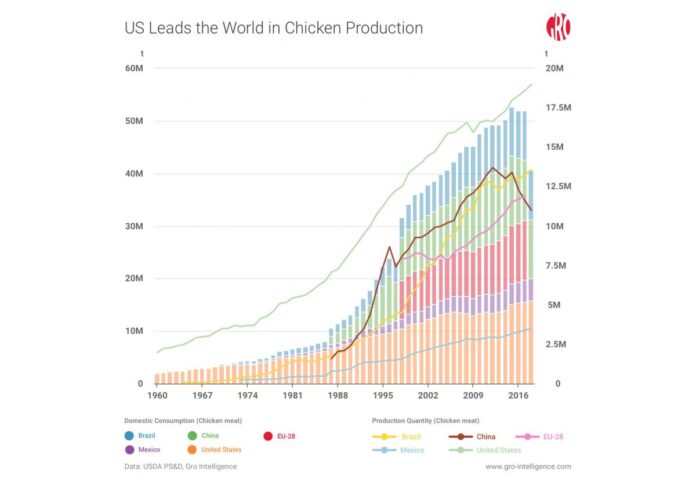
Debate continues over how antibiotic resistant bacterial strains in poultry can impact humans. Consider avoparcin, an antibiotic used in poultry feed but not in the treatment of humans. Avoparcin belongs to the glycopeptide class of drugs used in both animals and humans. If bacteria develop resistant strains to avoparcin, opponents suggest that they might also become resistant to another glycopeptide antibiotic used in humans; vancomycin. The likelihood of cross-resistant bacterial development increases with more frequent antibiotic use. Sepiolite, a common non-antibiotic feed additive used to reduce abdominal fat percentage in broilers, can even promote this cross-resistance in the digestive tract of birds. A direct link between antibiotic use in animals and human health remains hard to assess as there are many factors that influence the risk. The US Food and Drug Administration (FDA) asks drug developers to complete a risk assessment before new antibiotics can be used in animal production and in humans. The FDA"s measure does not go far enough for those concerned that antibiotics used in feed will negatively affect humans if not heavily regulated. (Chart 3: US leads the world in chicken production).
The Center for Veterinary Medicines of the FDA published a Guidance for Industry manual in 2012 recommending that antibiotics not be used for growth promotion, increased performance, nor for improved feed efficiency. The manual also warns against the use of antibiotics deemed to be of critical importance by the World Health Organization. While the manual is not enforceable by law, these FDA best practices can help guide the poultry industry away from indiscriminate antibiotic use in their flocks. Unrestricted use of easily available antibiotics worldwide further challenges global efforts at reducing the risk of antibiotic resistance. The poultry industry, pressured by increasing consumer demand for antibiotic-free products, may now play a leading role in the implementation of responsible antibiotic use practices. (Chart 4: Global chicken exporters).
The tide seems to be turning against antibiotics in chicken with huge industry players publicly enacting strict restrictions on their use. Fast food chain Chick-fil-A declared that they will eliminate all antibiotics in their chicken by 2019. Perdue, America"s fourth largest chicken producer, has banned all human antibiotics and some common non-human antibiotics like ionophores in their supply chain.
Pointing to improved feed use efficiency, Sanderson Farms, the third largest poultry producer in the US, continues to defend antibiotic use in poultry hatcheries and feed. "We have decided we"re not going to sacrifice our environmental goals, our animal welfare goals, or our food safety goals for marketing purposes," Mike Cockrell, chief financial officer of Sanderson Farms, commented to the New York Times. While Sanderson Farms remains behind the pack, consumer promises like Tyson"s "no antibiotics ever" have become more of an industry standard.
Conclusion
As the poultry industry tries to find a consensus on what constitutes responsible antibiotic use, the pork and beef industries remain well behind it. A chicken"s life cycle is much shorter than either a cow"s or a pig"s, presenting fewer opportunities for infection. Vertical integration in the chicken industry allows companies like Perdue and Tyson to dictate quick changes within their massive supply chains. As the global middle class balloons above 3.2 billion, the demand for cheap sources of animal protein brings chicken into focus. Whether through regulation or by public pressure, practices in chicken production will be forced to pose less risk to the health of the human population.