
























The ongoing West Asia conflict is threatening food security across import-dependent countries by disrupting fertiliser markets, raising energy prices, and straining global supply chains, FAO Director-General QU Dongyu warned at the UN agency’s regional conference for the Near East.
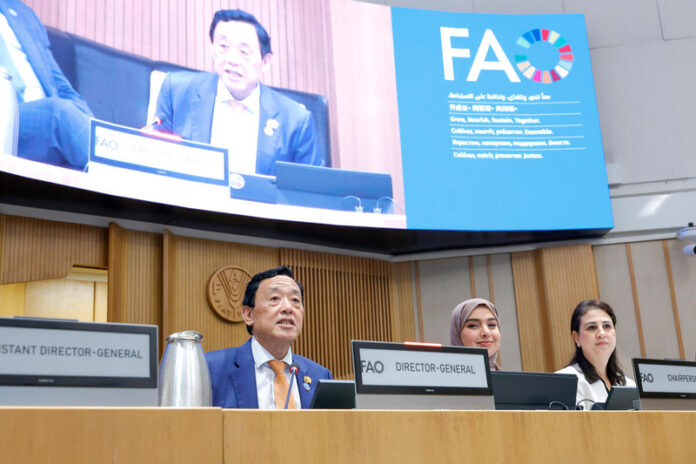
Speaking at the 38th Session of the FAO Regional Conference for the Near East (NERC38) in Rome, Qu said the conflict is adding further pressure on fragile agrifood systems and global supply chains, affecting the availability, accessibility, and affordability of food.
“There is immense importance of maintaining trade flows, and of ensuring access to adequate food for all, particularly in import-dependent countries,” Qu said in his opening statement.
The Director-General warned that significant disruptions to food production, trade, and distribution systems across the region are being compounded by global implications, including rising energy prices and disruptions in fertiliser markets, which increase production costs and affect agricultural productivity both within the region and beyond.
The crisis is affecting all agricultural inputs, including chemicals and machinery in addition to fertilisers. Qu informed UN Secretary-General Antonio Guterres that the impact would have “long-term consequences for agriculture,” even if the conflict were to end today.
FAO is closely assessing the impacts of ongoing global conflicts on food security and agrifood supply chains to provide evidence, technical expertise, and policy support to help members safeguard food security, strengthen resilience, and protect rural livelihoods.
“At FAO, our work is firmly grounded in the belief that the right to food is a basic human right, and that peace is a prerequisite for food security,” Qu said. “Efficient, inclusive, resilient and sustainable agrifood systems are critical to support recovery, reduce vulnerabilities, and contribute to long-term stability and peace in the Near East.”
The NERC38 was chaired by the United Arab Emirates, represented by Amna bint Abdullah Al Dahak Al Shamsi, Minister of Climate Change and Environment. She affirmed that the UAE’s chairing aims to drive a fundamental shift in the region’s agrifood systems, transforming from reactive crisis management to proactive innovation.
Ministerial roundtables addressed four key priorities: strengthening food supply chains and reducing food loss and waste; diversifying food supply sources and enhancing local production capacities; investing in infrastructure, agrifood enterprises, and rural development; and fostering partnerships to translate priorities into results.