

























by Fred Brouns, Peter Shewry, and Daisy Jonkers
Wheat is by far the most consumed grain in Western countries. About 95 percent of world wheat production consists of ‘modern’ bread wheat. This species (Triticum aestivum) is estimated to have evolved about 10,000 years ago and been selected by farmers because of better properties (notably yielding the best harvest) than emmer which was the currently cultivated form of wheat. The majority of the remaining five percent production consists mainly of pasta or durum wheat (Triticum turgidum L.subsp. durum). Spelt, emmer and einkorn which are often labeled as ‘ancient grains’ together form only a tiny part of the total harvest.
Although wheat products are widely consumed, ingestion may result in adverse reactions in some individuals, with three types being recognised: celiac disease, gluten/wheat sensitivity (NCGS/NCWS) in the absence of celiac disease, and wheat allergy.
Various wheat components play a role in triggering these disorders, including specific proteins and FODMAPs. In order to trigger adverse reactions, the proteins, or protein fragments, need to be resistant to the conditions during food processing (notably cooking) and to digestion in the intestines, the major components being undigested gluten peptides and amylase trypsin inhibitors (ATIs).
The intact gluten peptides contain amino acid sequences (epitopes) that can be recognised by the immune system upon passage through the intestinal wall, potentially resulting in immune activation and inflammation in genetically susceptible individuals. In certain circumstances, the permeability of the intestine can then increase, allowing substances from the intestine to pass through the intestinal wall into the blood (fig 2).

not enter the blood under normal circumstances (figure after BallenaBlanca, 2016 Wikimedia Commons).
Gluten consists of two protein fractions, glutenin and gliadin. Gliadin is the major source of the indigestible gluten peptides causing celiac disease, in particular a ‘33-mer gliadin peptide’ which can induce a strong immune response. This peptide is present in all types of wheat having the DD genome (bread wheat and spelt- AABBDD), but not in emmer, durum (AABB) and einkorn (AA) See Figure 1.
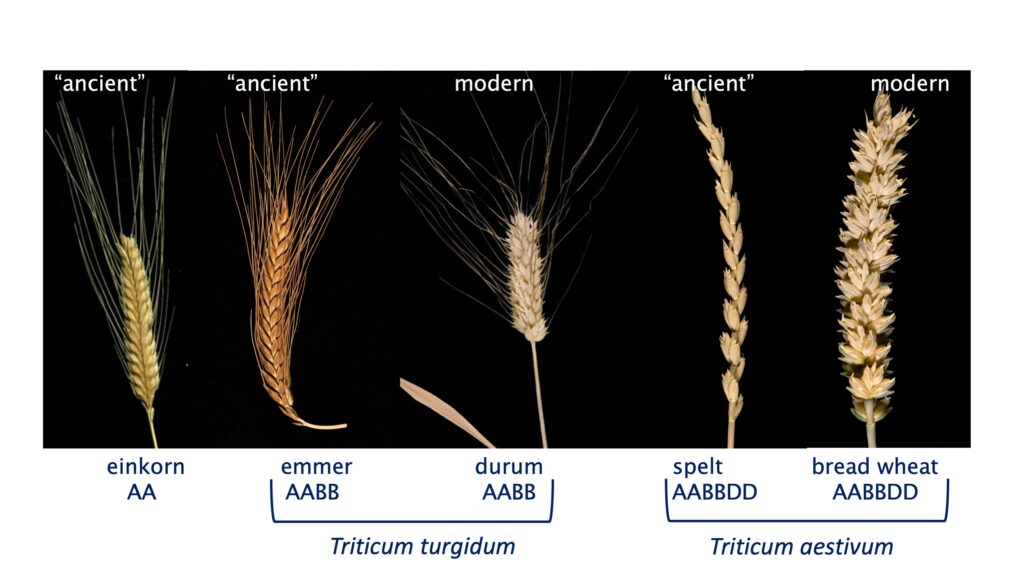
For more detail see https://doi.org/10.1111/nbu.12551
Social media and marketing often suggest that grains not containing the DD genome are better tolerated and relatively safe in terms of disease risks. However, this assumption is incorrect because all of these grains, including einkorn, contain gliadins and glutenins which have other celiac epitopes. In addition to their reputation as allergens (especially in bakers’ asthma), ATIs may also be involved in the development of celiac disease and wheat/gluten sensitivity. However, the exact trigger, or triggers, of non-celiac wheat/gluten sensitivity remain unknown and may vary between individuals.
FODMAPs
FODMAPs are carbohydrates that are either not digested and/or absorbed (in the case of simple sugars) in the small intestine. When they subsequently enter the large intestine, they are rapidly fermented by the intestinal flora (microbiota). Recent studies have shown that FODMAPs are in fact responsible for gas formation and accumulation, which causes most of the intestinal symptoms (bloating, laxation complaints) that consumers unjustly self-report as ‘gluten sensitivity symptoms’. FODMAPs are also known to trigger the symptoms of irritable bowel (IBS), which are very similar to those reported in NCWS. Wheat products contain several types of FODMAP, the most abundant being inulin type fructans, which include fructo-oligosaccharides.
In addition, smaller amounts of raffinose (a trisaccharide sugar), mannitol (mannitol) are present. Dietary fibres are also contained in wheat bread (the polysaccharides arabinoxylan and betaglucan) and resistant starch, which are fermented in the colon.
In our daily diet, grain products (bread, breakfast cereals/muesli, pasta, etc.) can contribute a significant share of the daily intake of FODMAPs and dietary fibres (Table 1). Other foods that contain relatively high levels of FODMAPs are fruit, vegetables, onions, legumes and apple juice.

Whether or not FODMAP intake will lead to abdominal/intestinal complaints ultimately depends on the amount ingested and a person’s intestinal sensitivity. Gas formation in the intestine is not a disease, but it can be a very unpleasant symptom. Most individuals tolerate the intake and fermentation of FODMAPs (and fibre) without disturbing symptoms. It is also important to note that the fermentation of dietary fibre and FODMAPs positively influence the composition and metabolism of intestinal microbiota, support the intestinal wall barrier function and leads to a reduction of a number of metabolites that are known to compromise gut health.
Following a low FODMAP diet can therefore lead to a sharp decrease in the intake of indigestible and fermentable carbohydrate/fibres intake, which is unfavourable for intestinal health and may increase the risk of inflammation and cancer. For this reason, a low FODMAP diet is primarily recommended for people with irritable bowel syndrome, but for a limited period and under the guidance of health professionals.
Effect of dough fermentation on the FODMAP content
During the fermentation taking place in the dough, fructans present in the flour are degraded by the microbiota. The fructan content in final dough and bread may therefore be as little as 10-20 percent of the starting values in the flour. It is often assumed that long-term sourdough fermentation leads to a significantly greater reduction in fructan content than yeast fermentation, but this was not confirmed in a recent controlled comparative study.
Do ancient wheat varieties lead to fewer intestinal complaints than bread wheat?
Modern bread wheats have been selected to have good breadmaking quality, as well as high grain yields, and it is often assumed that this has resulted in higher contents of proteins, including the gluten proteins that determine quality and ATIs, than in ancient or older types of wheat, resulting in greater risk of provoking reactions. However, recent research shows that these assumptions are incorrect. The major impact of wheat breeding has been to increase yield and this results in lower contents of protein, and gluten proteins, in modern bread wheats when grown under the same conditions as emmer, spelt (fig 3).

‘ancient wheat’ in the diet gives less risk of developing celiac disease, gluten allergy and gluten sensitivity is not justified.
Source: Brouns et al, https://doi.org/10.1111/nbu.12551
These results debunk common suggestions that ‘ancient grains’ contain less gluten and less gliadin in favour of better intestinal tolerance. Recent research also confirmed that the contents of ATIs in bread wheat are not greater in bread wheats than in emmer, durum and spelt wheats although the contents are much lower in einkorn (fig 4). These assumptions have nevertheless led to marketing on the basis that ‘ancient grains are healthier’ and a corresponding increase in consumer demand.

the content in einkorn, there is little difference between all other types of wheat. The lower content in einkorn
should not be seen as ‘less risk of intestinal adverse reactions, because the immune stimulating potential of
all 5 wheat varieties does not differ. Source Geisslitz et al 2022.
Source: Geisslitz 2022 et al, https://doi.org/10.1007/s00394-022-02841-y
Do the potential health benefits of wheat differ between countries?
In order to correctly compare the composition of different wheat varieties, it is very important to take environmental factors (where was the grain grown and harvested) into account. The composition of wheat grains is largely determined by the properties of the specific type of wheat (the genotype), the growing environment (climate, fertilisation, pesticides, etc.) and the interaction between these.
A sample of wheat that grows in a hot dry climate, such as Sicily, will therefore differ composition from exactly the same type of wheat grown in a cool wet climate such as England. These differences may include effects on potential health benefitting components such as fibre and phenolics. Consequently, comparison of the compositions and healthy benefits of types of wheat must take the growth conditions into account and it is not a valid approach to compare samples grown in different environments. The same applies to spontaneous sourdough cultures, which are known to contain a broad spectrum of lactobacilli in the microbiota but can otherwise differ considerably in composition. For this reason, the composition of a sourdough bread baked in one country, such as France, cannot be compared with a sourdough bread from another, such as England. Related to the points discussed above work was carried out in the ‘Well on Wheat?’ project to determine whether the assumption that bread made from ancient grains processed by sourdough fermentation is healthier and leads to less gastrointestinal symptoms, than bread made from modern bread wheat and processed with yeast fermentation. We will discuss the results of these studies in the forthcoming articles.
Published in the July 2024 issue of Milling and Grain.