




























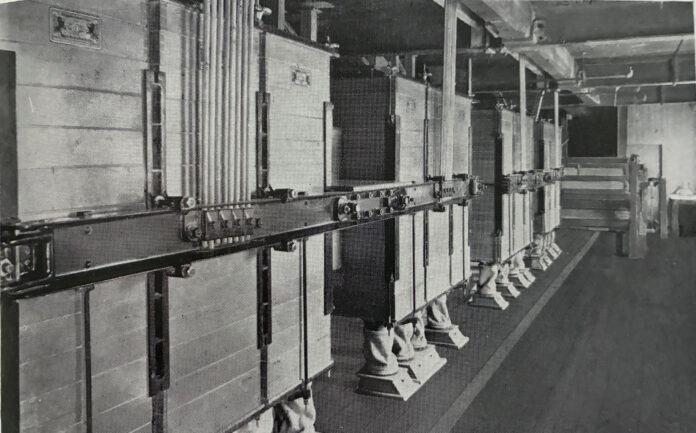
The Hanover Street Mill in Dublin occupies an important place in the development of flour milling in Ireland. Originally constructed as an oil-crushing plant, the premises were converted to flour milling around 1850, and the site later became home to what was effectively the second roller mill established in Ireland. By the late nineteenth century, the mill had already gained a reputation for technical enterprise and a willingness to adopt new milling methods.
An article in Milling In 1938 described how the mill had just undergone a major programme of re-design to modernise its purification and dressing systems. The work demonstrated how the installation of large plansifters and improved exhaust arrangements could significantly increase efficiency when milling soft wheats.
Early enterprise
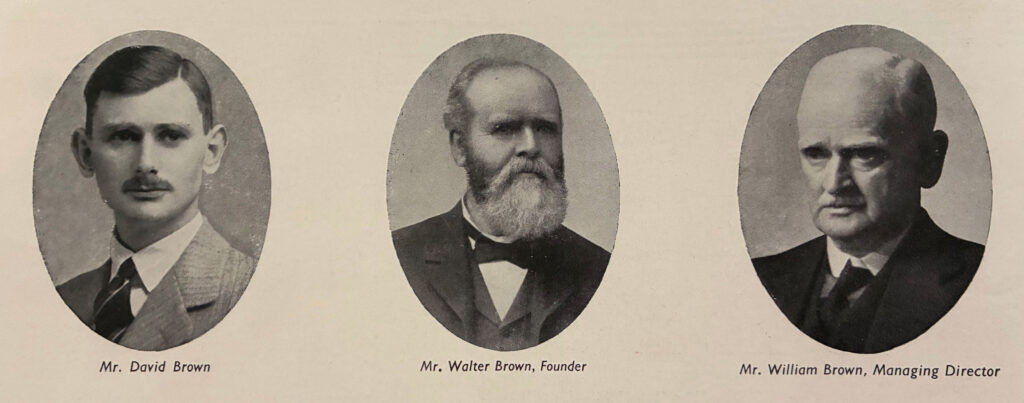
The Hanover Street business was established by members of the Brown family, originally from Moniaive, Dumfriesshire in Scotland. Two sons of the original miller moved to Ireland, founded the Dublin operation and quickly developed a reputation for adopting new milling technology.
Among their early innovations was the installation of porcelain rollers and purifiers, introduced at a time when such machinery was still uncommon in England. Their willingness to invest in advanced equipment proved commercially successful. The firm was able to purchase Lancashire millers’ offals, re-mill and purify them and recover a profitable proportion of good-quality flour. The experience demonstrated the value of investing in efficient machinery and keeping pace with technical developments.
By 1885 the Hanover Street plant had become a fully operational roller mill. Around this time Hastings Brown, who had completed three years of roller-milling experience in the United States, returned to Ireland and developed a new flow sheet for the mill. The machinery required for this reorganisation was supplied by Thomas Robinson & Son of Rochdale and was installed under Hastings Brown’s supervision.
Another member of the family, William Brown, joined the business in 1888 after gaining seven years’ practical milling experience. He later worked with Thomas Robinson & Son as a technical specialist and in 1896 travelled to Australia on the firm’s behalf. His experience of milling practices abroad later influenced developments at Hanover Street.
In 1924 the company was incorporated as Walter Brown & Co. Ltd., with members of the founding family continuing to direct the enterprise.
Wheat supply and conditioning
Although the mill itself was not located directly on the docks, it maintained storage accommodation at the port. Wheat was transported from these dockside stores to the mill in bulk wagons, where it was received through hoppers and elevators before entering the cleaning process.
The firm was also among the first to install the Robinson patent dryer and conditioner, known as the JOm type. Much of the wheat used by the mill was dried before reaching the plant but grain delivered directly from farms could be conditioned on this machine when required, ensuring that the wheat entered the milling process in the best possible condition.
The 1938 modernisation
By the late 1930s it had become clear that further improvements were needed if the mill was to remain competitive. The 1938 re-design envisaged a complete revision of the purification and dressing systems, together with improvements to the associated dust-extraction equipment.
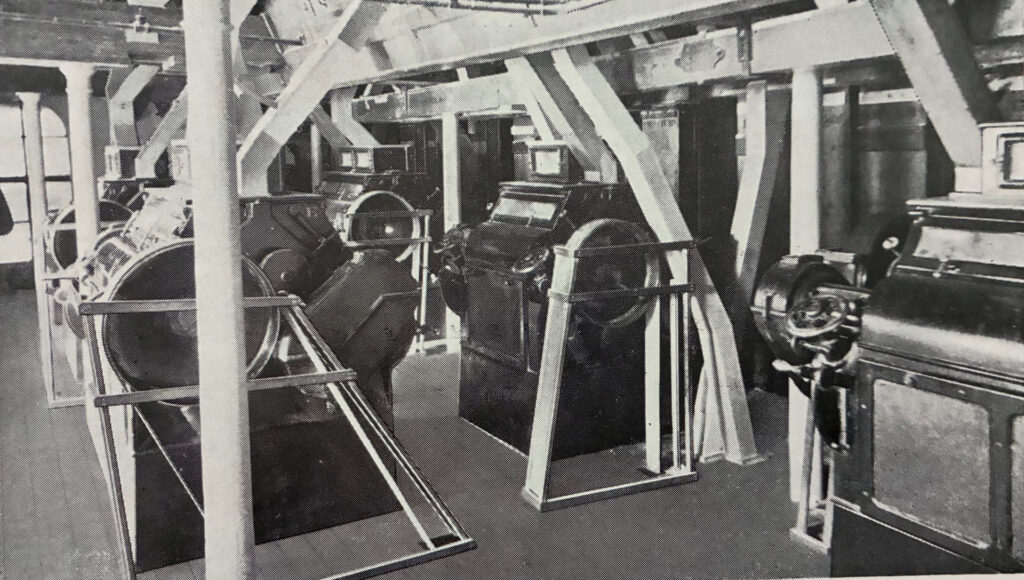
A new exhaust system formed an important part of the upgrade. The installation included a 32-sleeve suction filter dust collector equipped with a No. 8 fan, together with a new cyclone separator served by another No. 8 fan for the purifier system.
These additions not only improved air quality within the mill but also ensured that each machine could operate under the conditions intended by its designers
The role of plansifters
The most significant development in the re-planning of the mill was the introduction of large plansifters to handle the dressing operations.
The new installation included a No. 1A sextuple JSm plansifter fitted with detachable clothing frames, together with three No. 1 LQm type purifiers. These machines replaced a much larger number of centrifugal dressers that had previously carried out the same functions.
The plansifter, with its free-swinging motion, could perform the work of several centrifugal machines while occupying far less floor space. Each of the new plansifters contained thirteen sieve sections, allowing multiple separations to take place within a compact structure.
The efficiency of the new system made it possible to simplify the layout of the mill considerably. Where sixteen centrifugal machines had previously been required, the revised arrangement reduced this number to six.
Under the new scheme, all dressing operations were carried out on the plansifters except for the last break, its associated redresser, and the three tail-end reductions. The remaining reduction passages were dressed entirely on the plansifters, with one section proving sufficient for each reduction stream when arranged according to the Robinson milling process.

Increased output
The new design brought a significant improvement in production capacity. Previously, the mill produced approximately seven sacks of flour per hour. With the new dressing equipment installed, output could be increased to ten sacks per hour without the need for additional machinery or extra driving power.
The newly installed LQm purifiers were designed to work efficiently with well-graded feeds. A bucket feed with an automatic gate ensured that stock was evenly distributed across the sieves, allowing purification to begin immediately once the material reached the sieving surface.
William Brown emphasised the importance of the improved exhaust system in supporting these operations. Effective dust extraction ensured fuller recovery of material, reduced waste and a cleaner atmosphere within the mill, allowing each machine to perform to its full capacity.
A mill prepared for competition
By the late 1930s competition within the flour-milling industry was increasing and mills that failed to modernise risked falling behind. The redesign of the Hanover Street Mill demonstrated how thoughtful improvements in machinery and layout could increase efficiency, reduce complexity and expand production without excessive capital expenditure.