



























Location: Konya, Türkiye
Client: Bahri Dağdaş International Agricultural Research Institute
Supplier: KPM Analytics
Project: Development of a specialised wheat flour selection protocol for biscuit production
Capacity: Screening approximately 200 wheat genotypes annually
Status: Operational; varieties Aliağa and Savatara registered and in production
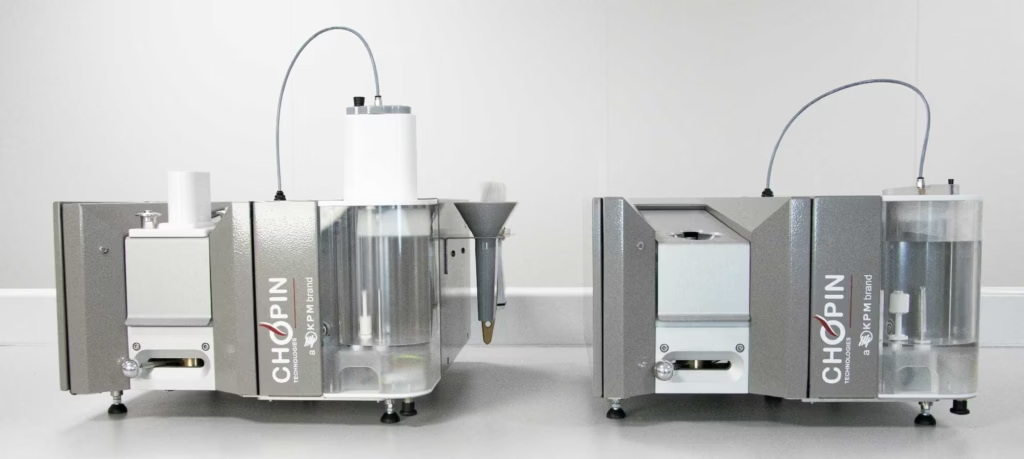
The Bahri Dağdaş International Agricultural Research Institute has pioneered a specialised wheat flour selection protocol for biscuit production using the Mixolab Universal Flour & Dough Analyzer, bridging the gap between field breeding and industrial baking requirements.
Established in 1914, the institute operates under Türkiye’s Ministry of Agriculture and Forestry. Its Quality and Technology Laboratory performs comprehensive analyses of bread and durum wheats, screening approximately 200 wheat genotypes annually for biscuit-making potential.
The challenge
In biscuit production, wheat flours require a weak gluten structure and the ability to form dough suitable for controlled spreading. Unlike bread-making, which demands high protein and strong gluten, biscuit manufacturing requires low protein, low water absorption capacity and controlled starch behaviour to achieve the desired ‘snap’ or crunch.
Identifying specific genotypes with these characteristics from thousands of candidates is a complex scientific challenge. The institute addresses this using Mixolab analysis to evaluate both protein quality and starch behaviour simultaneously.
The solution
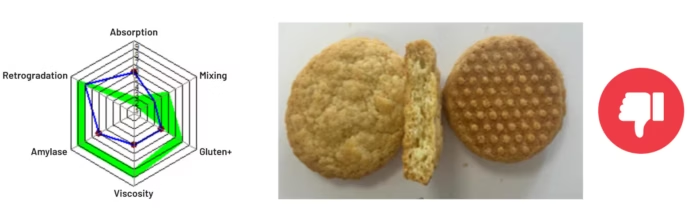
The institute has developed a high-precision ‘Biscuit Analysis Profile’ based on five critical measurement points (C1–C5) tracked during the 45-minute analysis:
| Parameter | Target Range | Significance |
| C1 | ~1.1Nm | Indicates water absorption (<54%) and mixing properties |
| C2 | 0.35–0.45Nm | Measures protein weakening; higher α angle indicates weak gluten (good for spreading) |
| C3 | 1.6–2.1Nm | Starch gelatinisation; medium β angle allows controlled dough spreading |
| C4 | 1.5–1.7Nm | Gel stability; controlled decrease preferred for crispness |
| C5 | 2.5–2.7Nm | Starch retrogradation during cooling |
Based on these parameters, the institute established that an index value of 2-36-677 is suitable for biscuit flour selection.
Impact and results
This data-driven approach has delivered measurable outcomes:
- Massive screening: The lab screens approximately 200 wheat genotypes annually for biscuit-making potential
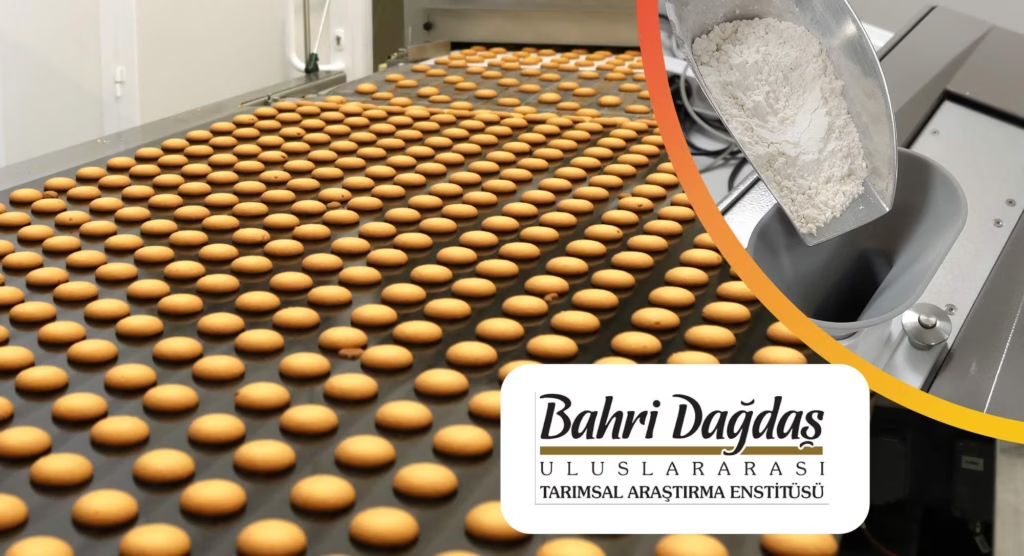
- Strategic collaboration: A close partnership with Ülker, Türkiye’s leading food company, validates laboratory findings with real-world industrial baking trials
- National self-sufficiency: The registration of varieties such as ‘Aliağa’ and ‘Savatara’ provides the Turkish food industry with high-quality domestic raw materials tailored for biscuit standards
- Global leadership: As coordinator for the International Winter Wheat Improvement Program (IWWIP), the institute shares its high-quality genotypes with over 50 countries, collaborating with CIMMYT and ICARDA
From lab to market
Through systematic Mixolab analysis, the Bahri Dağdaş International Agricultural Research Institute has transformed wheat breeding efficiency and strengthened industry partnerships, solidifying Türkiye’s role as a hub for grain innovation.
Disclaimer: The numerical values presented are based on the institute’s long-term research and may vary depending on product type and industrial requirements.