






























by Roger Gilbert, Milling and Grain
The overall message to feed manufactures and integrated fish producers during dsm-firmenich’s ‘Aqua Partner Days 2026’ at the end of April was that aquaculture producers can create significant value by combining measurable sustainability, resilient nutrition supply chains and advanced nutritional technologies. Reliable data, high-quality vitamins, effective carotenoid use and improved vitamin D nutrition can all contribute to better performance, stronger sustainability claims, reduced risk and improved commercial outcomes. They had three presentations that covered linked themes: sustainability measurement, vitamin and carotenoid market resilience and the role of Hy-D in aquaculture nutrition.
Sustainability is becoming a business-critical priority for terrestrial and aquatic animals alike, with growing pressure for environmental gains to be reflected in decision-making throughout the global food supply chain.
Retailers, regulators, financial institutions and consumers increasingly want credible data on the environmental footprint of the animal protein products they are trading, purchasing or selling and this includes consumer choices too.
Not only does this impact the way livestock are fed but, as our aquatic food species such as shrimp, salmon and Tilapia develop a taste for terrestrial feed ingredients so to can their carbon footprint be better equated to other protein sources.
One way to achieve this and to maintain a focus on carbon reduction in the food supply chain is to use a software platform developed by dsm-firmenich for the livestock and aqua industries – Sustell®.
Sustainability can be measurable
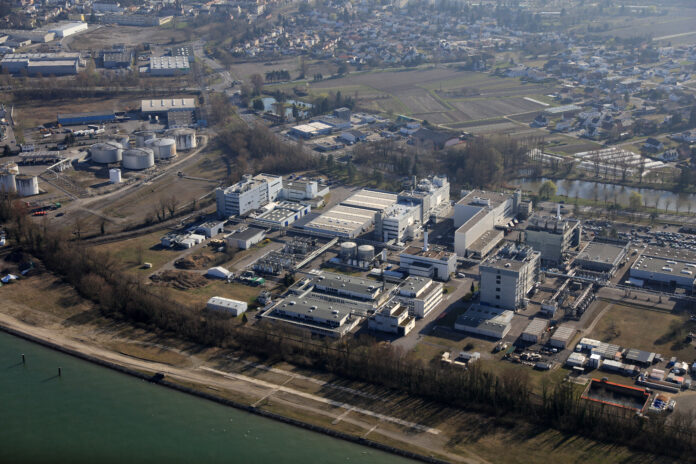
Companies already collect much of the necessary farm, feed and processing data, says Dr David Nickell, who oversees the development of Sustell®, when speaking to a visiting group of Latin and Asia representatives and feed manufacturers to dsm-firmenich’s Village Neuf production plant in France in late April.
He says platforms such as Sustell® help convert that data into verified lifecycle assessment results.
Dr Nickell explains, “Sustell® is a full ecosystem software-as-a-service platform that connects the entire value chain. We work from the agronomy and crop side, which is critical because the footprint of feed ingredients ultimately shapes the footprint of the feed itself. The feed footprint then becomes a major contributor to the footprint of fish or shrimp production, alongside what is happening on the farm and during primary processing.
“This allows businesses to understand their carbon, water, land use, nitrogen and phosphorus footprints,” he adds.
“At the end of the day, it is a cost-effective and scalable solution. It represents a paradigm shift from relying on external experts to being able to manage and use these insights internally, while unlocking significant value in the process.”
Sustell® was developed as an independent tool, now approved by GMP-Plus, that helps feed companies and farmers unlock value in several ways: maintaining preferred supplier status, identifying operational inefficiencies, accessing sustainability-linked finance, supporting consumer marketing claims and potentially monetising carbon reductions.
Dr Nickell says sustainability is no longer just about ambition or compliance, “It is about proof, auditable numbers and business value.”
A major point was that most of the power to reduce emissions lies upstream, especially in feed and farming.
“Improvements in diet formulation, feed efficiency, survival rate and nutritional strategies can deliver meaningful carbon reductions, potentially around 27–30 percent, which aligns with the targets many downstream food companies have set for themselves by 2030,” he concluded.

Market update for vitamins and carotenoid
The second topic of the afternoon was aimed at updating the group on the vitamin and carotenoid markets and to discuss the importance of vitamins are in aquaculture nutrition.
While the recent and ongoing Iran War was having an impact on the market, the trends in the vitamin market had been occurring over a longer time period explained Stefan Habermacher, dsm-firmenich’s Global Product Manager for Carotenoids.
He focused on the concept of achieving ‘Optimum Vitamin Nutrition in Fish Diets’ in particular saying that there’s a marked difference in performance between applying standard recommended levels for vitamin nutrition – to prevent deficiency – and levels that deliver optimal performance under modern farming conditions, especially when animals face stress, disease pressure or changing feed ingredients.
Addressing the group of visiting Latin and Asia representatives and feed manufacturers, Mr Habermacher highlighted that vitamin requirements need to be reviewed as diets change, particularly with the move towards more plant-based ingredients.
“I would recommend taking a closer look at where your feed currently stands in terms of vitamin requirements.
“As feed formulations shift and move towards more plant-based ingredients, this can affect both vitamin requirements and inclusion levels. These changes need to be adapted alongside evolving feed compositions and ingredient strategies,” he says.
“Feed ingredients, mycotoxins, gut health and contaminants can all affect vitamin absorption and performance.”
A major market message the industry should be aware of he says, is the high dependency it has on China for global vitamin supply.
“Around 80 percent of vitamin supply comes from China, and for some vitamins the figure is even higher.
“dsm-firmenich has positioned itself as one of the few suppliers able to offer a fully non-Chinese vitamin premix, using production and partner facilities in Europe.”
Mr Habermacher warned that vitamin markets are volatile, especially following recent geopolitical disruption.
“Prices have risen in the short term but remain historically moderate.”
The key recommendation was to focus not only on price but on supplier reliability, resilience and product quality.
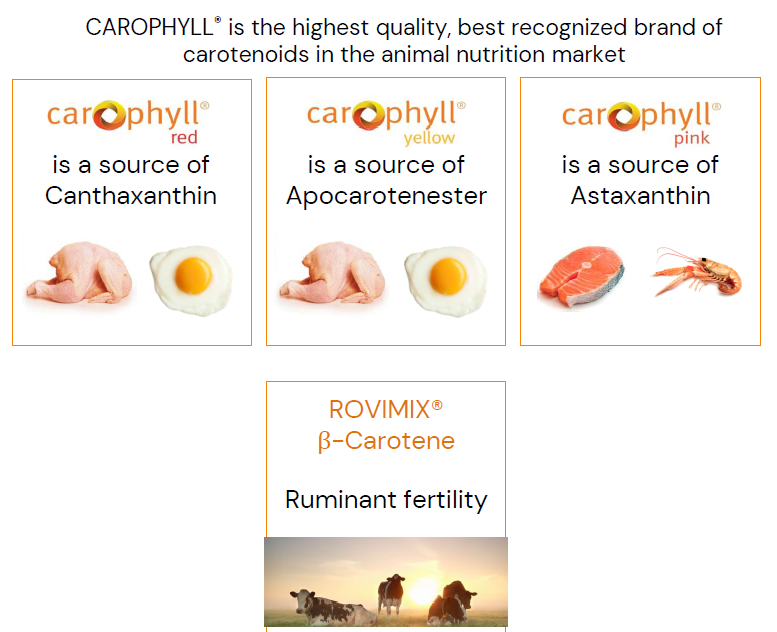
Astaxanthin and Carophyll Pink were also discussed. Astaxanthin was presented not only as a pigmentation ingredient for salmon, trout, shrimp other species and for eggs but also as having health and survival benefits.
He emphasised that vitamin A quality is important because poor vitamin A stability can reduce astaxanthin availability for pigmentation, leading to poorer colour outcomes and possible customer complaints.
Advantages from Hy-D and vitamin D in aquaculture
The third speaker, Dr Sebastien Rider who is dsm-firmenich’s Principal Aquaculture Scientist based in Kaiseraugst, Switzerland introduced Hy-D, a 25- hydroxyvitamin D3 product developed for aquaculture.
“A great number of nutrients rely on the vitamin D system for their utilisation and distribution throughout the animal,” says Dr Rider.
He described Vitamin D as unique because it is converted into a hormone that regulates core biological functions, including gene expression, cell development, mineral balance, immunity, growth and nutrient utilisation.
Dr Rider explained that standard Vitamin D3 must first be converted in the liver into 25- hydroxyvitamin D3 before it can become active. This first conversion step is slow and can be a bottleneck, especially when liver function, stress or health challenges affect the animal.
“Hy-D bypasses this slow step by directly supplying 25- hydroxyvitamin D3,” he says.
Research in salmonids showed that Hy-D improves Vitamin D status, growth, feed conversion, nutrient utilisation, mineral absorption and potentially skin health, wound repair and organ development.
Work is also ongoing in other species, including seabass, cod, bream, Tilapia and shrimp.
For shrimp, he noted that the Vitamin D system appears different from fish and humans but vitamin D still supports growth, feed conversion, mineral retention, gut health, and immunity. Studies showed that 25- hydroxyvitamin D3 had higher efficacy than standard vitamin D3, improving growth, survival, gut health and reducing inflammation.
For more information on Hy-D, check out International Aquafeed’s coverage on the topic, here: Putting the ‘D’ Back in Diets : Enhancing Fish Diets with Hy-D® for Vitamin D