





























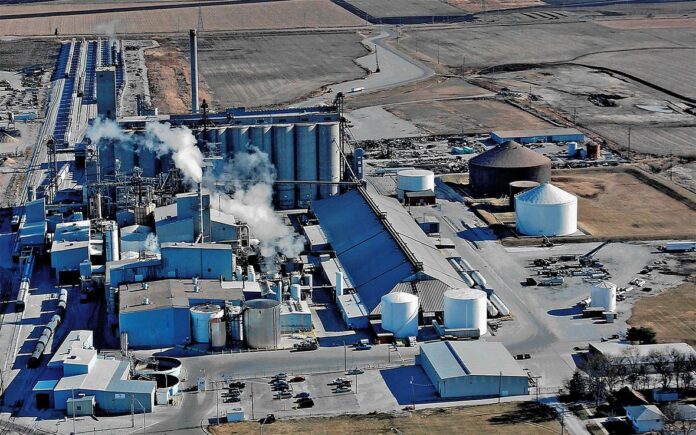
ADM has announced a series of investments to expand North American oilseed crush capacity across four US facilities, unlocking approximately 700,000 metric tonnes of additional annual capacity in response to growing demand for renewable fuels and vegetable oils.
ADM infrastructure investments will target its existing crush facilities in Frankfort, Indiana; Deerfield, Missouri; Lincoln, Nebraska; and Spiritwood, North Dakota – part of the Green Bison joint venture with Marathon Petroleum Corporation. The work is expected to be completed between mid-2028 and early 2029.
“These investments reflect ADM’s continued focus on targeted growth opportunities in areas where long-term demand trends are creating new opportunities for farmers and customers,” said Gary McGuigan, president of ADM’s North America Ag Services and Oilseeds business. “Strong demand – supported by biofuels policy in the US – is driving opportunities for farmers and the broader American agricultural sector.”
Scope of ADM infrastructure investments
The four projects will focus on debottlenecking, storage improvements and equipment upgrades:
- Frankfort, Indiana: Storage improvements, optimisation and multiple equipment upgrades (completion: late 2028)
- Deerfield, Missouri: Capacity unlocking in conveying, flaking, extraction and utility systems (completion: late 2028 or early 2029)
- Lincoln, Nebraska: Meal storage enhancements and debottlenecking to eliminate current restraints (completion: late 2028)
- Spiritwood, North Dakota: Operational optimisation and select equipment improvements (completion: mid-2028)
The combined additions are expected to unlock approximately 700,000 metric tonnes of additional annual crush capacity, equating to more than 25 million bushels of new demand for American farmers. ADM is also evaluating similar investments at other North American crush locations.
The projects follow ADM’s recent investments in its Clinton, Iowa, corn facility and its Optima, Oklahoma, grain elevator.
“These investments will help connect more American farmers to growing domestic and global markets while strengthening the infrastructure that supports US agriculture,” McGuigan added.