


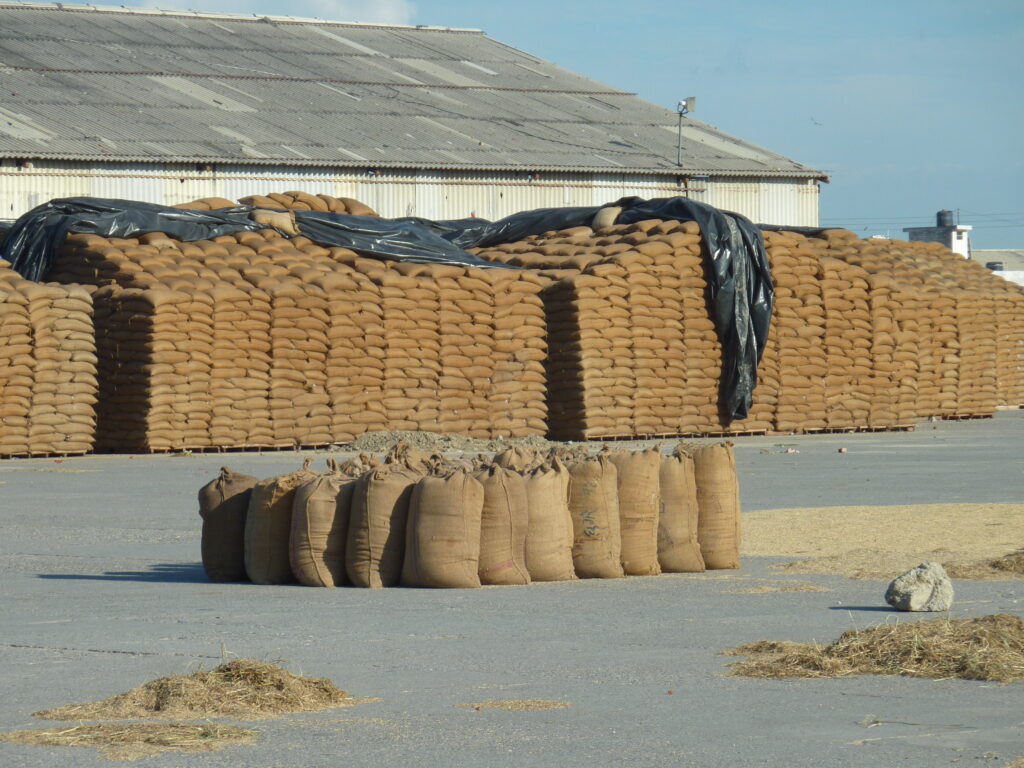
The International Grains Council (IGC) has raised its 2026/27 grain ending stocks forecast for a third consecutive month to 626 million tonnes, an increase of seven million tonnes on the previous estimate, according to its latest Grain Market Report.
The upward revision is driven by unusually heavy inventories in Russia and Ukraine, and follows a larger carry-in that added to overall supplies. Total grain production is forecast at 2428 million tonnes, one million tonnes above last month’s figure, as upgraded wheat and barley estimates offset a reduction for maize. The largest country increases are for Turkey, Australia and Argentina, partly offset by a reduction for the United States.
World consumption is trimmed by two million tonnes month-on-month to 2444 million tonnes, mainly tied to a reduced estimate for maize feeding. Global trade is fractionally lower at 449 million tonnes, reflecting smaller wheat and barley shipments.
The IGC grain stocks forecast contrasts with the position in rice, where global rice production in 2026/27 is projected to decline for the first time in 11 years, chiefly on lower aggregate output from major exporters. With rising populations in sub-Saharan Africa and Asia supporting food demand, inventories could contract, although they remain above the recent average. Rice trade is forecast at a record 61 million tonnes, up four percent, on an assumed uptick in demand from African buyers.
Soyabean production is forecast at a record 439 million tonnes, up two percent, reflecting a much larger US crop. Global use is seen expanding to a record as crush volumes rise, with trade projected at a high of 191 million tonnes, up two percent.
The IGC Grains and Oilseeds Index eased four percent to a three-month low. Wheat and maize sub-indices both fell seven percent, while rice rose eight percent to a near two-year peak amid tight supplies and strengthening international demand.
World dry peas production is predicted to contract by nine percent in 2026/27, following the prior year’s heavy increase, with sizeable declines expected in Russia and Canada.