


by The British Urethane Foam Contractors Association (BUFCA), United Kingdom
Controlling a store environment can be a risky business – with farmers running the risk of ruined crops. During spells of cold, wintry weather the internal surfaces of agricultural buildings can become wet with condensation and severely damage the harvest. By insulating the building this risk can be substantially reduced.
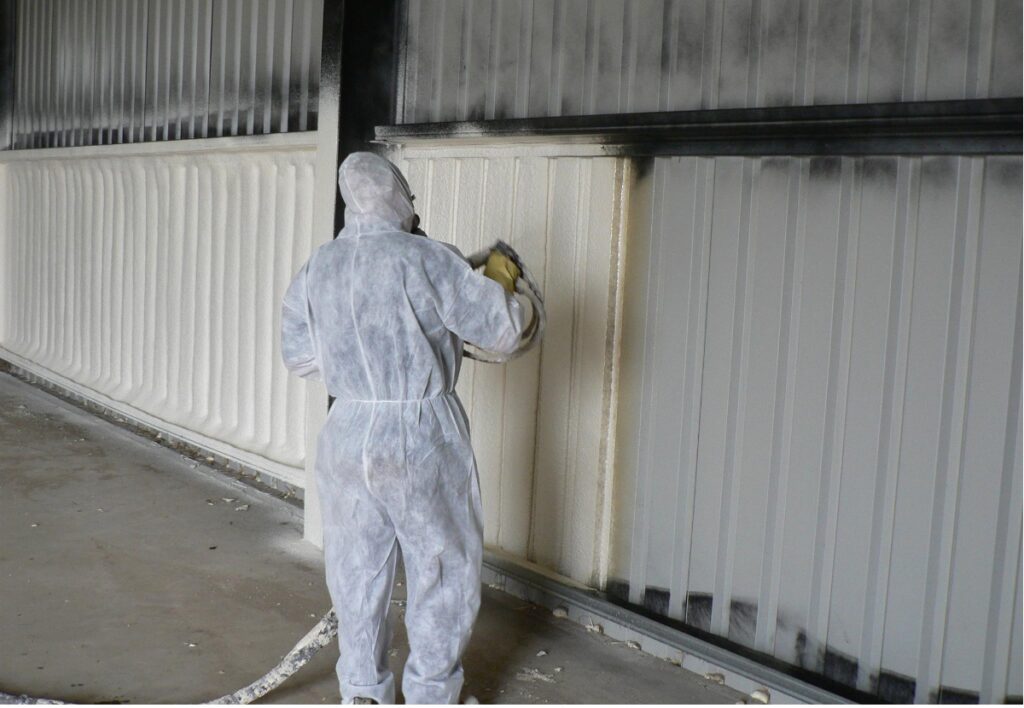
A closed-cell spray applied polyurethane foam insulant can be used directly onto the internal surfaces of the building façade. This will insulate the building and help to regulate the temperature so that sudden hot or cold temperature variations are not so likely. As the insulant is sprayed straight on to the building substrate this helps to seal the building and control internal temperatures.
Insulating the agricultural building allows the sugar levels of stored crops to be maintained for longer and lower temperatures can preserve crop quality.
Sprayed polyurethane foam is a simple task for a professionally trained installer. The association representing spray foam installers for agriculture and other sectors is the British Urethane Foam Contractors Association. The association has a list of registered installers at www.bufca.co.uk.
Application is a speedy process as installers are adept at installing large areas very quickly. The insulant is sprayed on and cures to form a robust, rigid layer of highly efficient insulation.
Closed cell polyurethane foam has been around for over 40 years. The polyurethane insulant is a two-component liquid system, which produces a highly efficient blanket of insulation with an exceptional thermal conductivity figure. Systems can be applied to various depths and have K-values in the range of 0.025 to 0.028W/mK.
Farmers know that the risk of condensation, freezing temperatures or the lack of a controlled temperature environment may be disastrous for crops. However, there is no longer any need to run this risk as a simple application of sprayed foam can help to maintain a healthy stock.
Case study: Insulation of grain storage building
BUFCA suppliers and installers have also been involved in creating fit for purpose and stand out insulation of grain storage buildings.
The supplier, Edu-Chem Ltd and the installer, Roofing Insulation Services Ltd carried out this project and these were the results:
The situation
This farm building was one of three, side by side, which were all constructed at the same time using the same materials. The problem was that they were all constructed many years ago and incorporated no insulation or condensation proofing. The roofs and walls were clad using fibre cement sheets, with a concrete lining constructed internally to enable storage of grain. However, when the grain was stored within the buildings, condensation was formed on the roof and dripped onto the grain.
The solution
The solution to insulate old fibre cement sheets was to use EduFoam: this not only provides excellent thermal insulation properties but also eliminates and prevents the future build-up of condensation on the internal surface of the cladding. Using this system also saves the building owner valuable time and money when it comes to insulating these older buildings.
About BUFCA
The British Urethane Foam Contractors Association is the national trade association comprising sprayed and injected polyurethane foam contractors, suppliers of sprayed and injected foam systems and equipment suppliers.
You can be assured of the highest standards of quality and service when employing a BUFCA member.